A Heart Wholly Christ’s
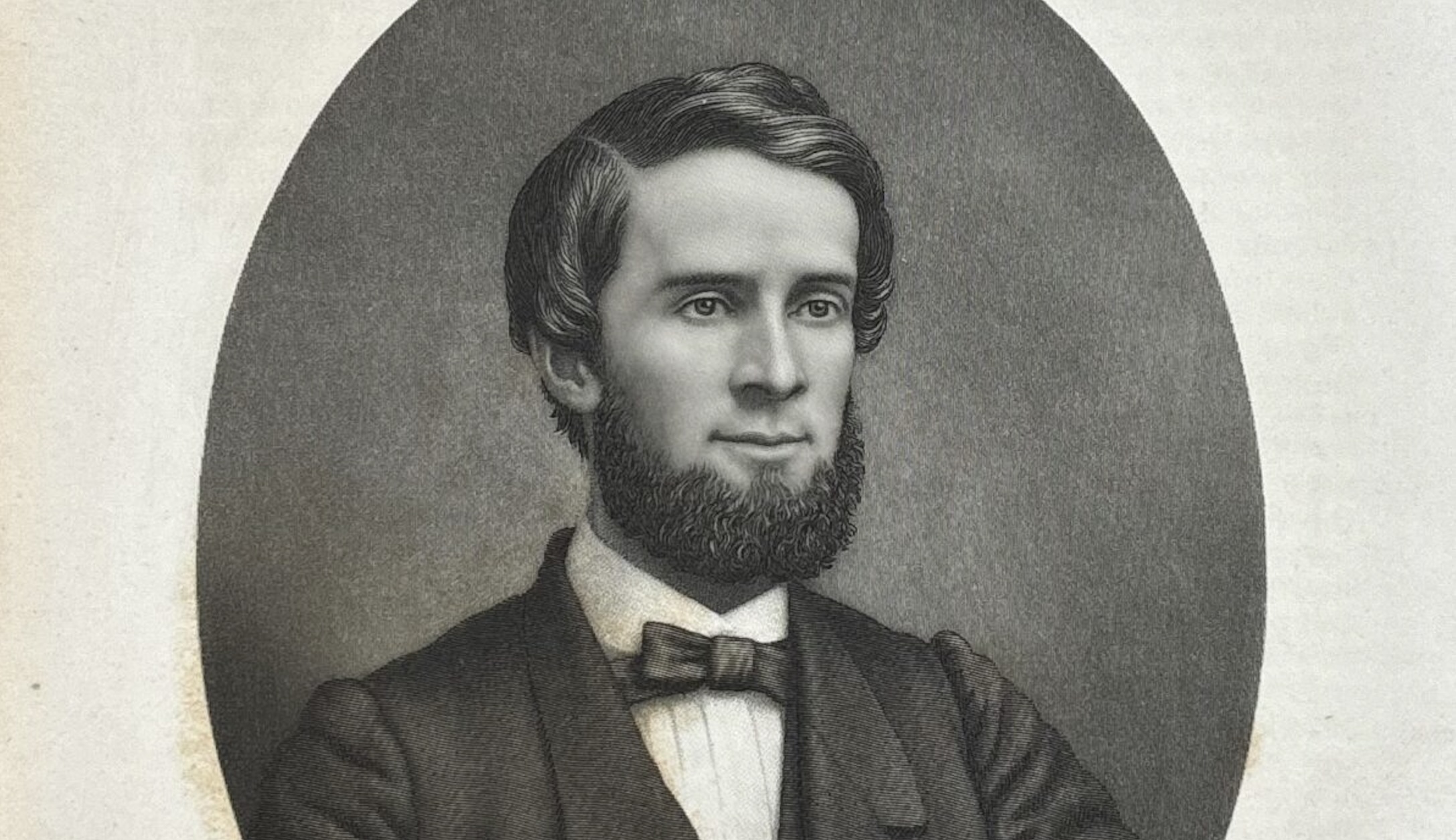
On 31 December 1866, Ashbel Green Simonton, the first Presbyterian missionary to Brazil, wrote what would be his final journal entry:
In the retrospect of my own life during the year now closed, I feel self-condemned. I can point to some labor performed as best I could, but have I progressed heavenwards? Here it is that I feel myself lacking. I cannot get beyond the prayer of the publican: ‘God be merciful to me, a sinner.’ Shall it be always thus with me? The very press and activity of my outer life have hindered my communion with Him to whom this service is paid. How often have my devotions been formal and hurried, or disturbed by thoughts of plans for the day! And sins often confessed and bewailed have asserted their power over me. Oh, for a baptism of fire to consume my dross; oh, for a heart wholly Christ’s! 1
Less than a year later, Simonton fell ill and died. He was thirty-four years old.
Called to Christ
Ashbel Green Simonton was born in 1833 outside Harrisburg, PA.2 His family was Presbyterian, for only Presbyterians would name their son after the original Ashbel Green, a well-known Presbyterian churchman and the eighth president of Princeton University (then the College of New Jersey). At his baptism, his mother and father consecrated him unto ministry. However, Simonton would not hear the Lord’s call until adulthood.
As a young man, Simonton was lost. He traveled the country—as he went, he recorded everything in his diary, a practice far more common in the past. He eventually settled in Mississippi, where he found employment as a schoolteacher. But this work felt empty to him. He moved back to Pennsylvania and began working in a legal clerk’s office. And still, he felt empty. Having been raised in a pious family, Simonton had some clues about the source of his dissatisfaction. He wrote,
At times I have feebly resolved and attempted to become what I felt I should be. I commenced secret prayer and the reading of the Bible and continued this practice for a long time. During the Princeton revival [a revival which occurred during his college years] I felt to some degree interested and made some effort to get an interest in the Savior’s love. But soon that feeling passed away and I was left as before or worse than before.
Simonton knew the gospel, at least in an abstract manner—but he had not experienced the grace of God. When he looked at his heart, he found nothing but instability.
Others are weeping over their sins but I cannot, though I am assured that my guilt is as deep a dye. Though I have a clear and firm intellectual knowledge of my condition my heart is unmoved. […] I am seeking after Christ, but I have not been able to find him. But though I am able to exercise neither faith nor repentance I am still encouraged to hope for mercy, for ‘Jesus is the author and finisher of faith’ and ‘Exalted to give repentance’ to those who seek it.
Increasingly distrustful of his own feelings, Simonton looked to Christ, and the light of the gospel dawned over him.
The more I analyzed and looked into my feelings and exercises of mind the more have I been perplexed and involved in doubt, and it is only when I turn from myself to the plain, clear and full promises of the Gospel that I find any stable footing.
Simonton entered into membership with his local church as a man convinced of his sin before God fully depended upon the sacrifice of Jesus Christ. Having heard and answered the call of the gospel, Simonton was prepared to answer the call to ministry. Simonton matriculated at Princeton Seminary, eager to realize that work to which he had been consecrated at baptism.
Called to Missions
Not even a month into his studies, Simonton attended a chapel service, where Charles Hodge delivered a sermon on the church’s responsibility to teach both at home and abroad.
This sermon has had the effect of leading me to think seriously of the foreign missionary field. The little success apparently attending missionary operations had tended to dissuade me from thinking of going. […] But I see I have been wrong. That the heathen will be converted to God is clearly revealed in the Scriptures, and I am convinced that day is coming rapidly. Those who are now laboring are preparing the way and God will not suffer their labor to be in vain. […] I can only throw myself on the Lord’s will, endeavoring to make an entire consecration of myself to His service and trust Him in the proper time to direct my steps aright.
Simonton continued his studies, and the Lord sharpened his desire for overseas service.
When I reflect . . . upon the clear and oft reiterated promises of God that the knowledge of Him shall be universal, I feel drawn towards the missionary work. That God’s promises will be fulfilled, I know; that this will take place speedily, I believe. But even if I should go and labor and die without being permitted to see this promised time, I may have a part in it.
He could not know that these words would later prove prophetic. In the meantime, his presbytery confirmed his call to missionary work. On 14 April 1859, the Presbytery of Carlisle ordained Simonton in Harrisburg. Four months later, he arrived in Rio de Janeiro.
Called to Brazil
At the time, Brazil was an undesirable field. Yellow fever was rampant. There was a considerable Catholic presence, but few Protestant churches focused upon to the planting churches. On one occasion, Simonton refused the request of a woman to baptize her child, “since she completely rejected one of the fundamental doctrines of Christianity.” For her, religion was “trying to get to heaven by imitating Christ.” He was disappointed in his preaching: “I despair of ever being able to speak extempore with fluency and success.” So, he committed himself to the study of Portuguese, “for this is my first great duty and until this is done the condition of usefulness here is wanting.” Finding a teacher proved difficult, but he remained certain that God would provide one. In the midst of these early trials, Simonton felt himself slipping into worldly modes of thoughts, prompting him to remember his calling: “I feel greatly a need of a clearer knowledge of Christ and a realizing sense of His presence and love. To be a missionary without a fervent love for Christ and zeal for souls. I would renew my consecration.”
At the end of 1859, Simonton reviewed the past months, wrestling with his desire for marriage and his desire for greater commitment to Christ.
I am glad I came here and that alone. It is, I am persuaded, for the best, even though my lot has been more lonely than it would have been, had my wishes prevailed. Now, just one year ago, I resolved the question of marriage, hoping but doubting, wishing but fearing. My hopes and fears have all been resolved by a decision brought about by Providence and I feel it is good. […] God has been good to be during 1859. I feel content to leave the future to Him believing that He will provide all I really need in His own and therefore the best time. […] I would that I could so realize the grace of Christ in all things, in the little as well as the great, as to be able to do every thing with a conscious reference to his glory.
The following year, Simonton committed himself to the work of ministry, and the work bore fruit. In January 1862, Simonton led the organization of the first Presbyterian church in Brazil, marked by celebration of the Lord’s Supper. “Far sooner than my weak faith had been expecting, God has given us to see the first fruits of our mission being gathered in. […] God be thanked that our feeble faith has been confirmed by seeing that it is not in vain that we preach the Gospel.”
A Happy Interlude
Two months later, Simonton received word that his mother’s health was failing. Since a few other missionaries had joined him, he felt he could return home for a season. While back in the United States, Simonton visited a number of cities, but his most impactful stop was Baltimore, where he met Helen Murdoch. After their engagement, he writes, “I have longed for an atmosphere of love, of sympathy, and of a healthy moral and intellectual tone such as in Brazil is alone found in the domestic circle where a true wife reigns. To God I give my gratitude that He has grace, courage, and love for me in the heart of her to whom I have given my affections, so that she is ready to forsake friends, home, and native land to share my life and labors.” They married on 19 March 1863; shortly thereafter, the couple set sail for Brazil.
Upon their return, Simonton resumed preaching, and the couple began to establish a home. “We have asked God to direct us and to order all things which concern us in such a way as to promote His glory and our welfare.” Meanwhile, the church was growing, and the number of children was increasing, so the missionaries began a Sunday school. In fact, the work in Rio had progressed so well, that one of the other missionaries and his wife departed for São Paulo, to begin a new work there. However, the Simonton’s felt that their calling remained in Rio, and so they looked forward to the next years with optimism, if a bit intimidated by the weight of the calling.
Soon, Helen became pregnant, and Simonton brightened in happy anticipation of a growing family. On his wedding anniversary, 19 March 1864, he writes in his journal: “It is … a day of pleasant recollections and grateful feelings. A year of blessing almost unmixed has passed, calling for warm gratitude to God and penitent confessions of unworthiness and unfaithfulness.”
At this point in our story of Simonton, there has been little cause for discouragement. The Lord blessed the growing church in Brazil. More missionaries had joined. Simonton had a wife, and his loneliness had been dismissed—and the prospect of children only increased his joy.
Three months later, things fell apart.
Called to Suffer
On 19 June 1864, Simonton writes:
Our first child is just born at eleven o’clock and it is now twenty-five minutes past. God be praised for His goodness. He heard and answered our prayers and I will praise Him for His goodness. The remembrance of Helen’s sufferings is yet too vivid to permit me to think of the child.
Helen experienced complications during the birth. While the child—a daughter—had been delivered safely, Helen’s condition remained precarious. Less than two weeks later, she had perished. Simonton writes,
God be merciful to me now for the deep waters have now come in upon me. Helen lies in her coffin in the little parlor. God has taken her so suddenly that I walk as in a dream.
Simonton was overcome with grief. Everything had gone so well. The Lord’s blessings had been so happily received. And now, what had been given had been taken away. Simonton lost his wife, and his daughter entered this world with nothing of her mother except her name.
How changed is all around me and within me. Yet the Lord has afflicted me and I must be still. I do feel that He has also upheld me so that I have not been utterly overcome. Unless I do bow submissively under this blow, I feel that it must harden me. My God and Savior keep me and my little Helen. Poor little thing. I am not yet conscious of more than caring for her.
The only comfort he received was the knowledge that his wife died trusting in Christ.
“God is not the God of the dead but of the living” is a scripture that is very precious to me now more than ever. The union of all saints to Christ, and through Him with the Father, and their communion with one another, are facts full of consolation.
Even so, the grief was nearly unbearable. Simonton was aware of the ease of his ministry up until that point. But now he was empty. “Just when my cup of earthly happiness was full, the source of the greater part of the purest of my joys is taken from me. Every waking moment tells me of my loss. I feel a void which nothing can fill save God alone.” Unable to care for his daughter, she was sent to São Paulo and placed in the care of the missionaries there. Simonton would visit her often. In the following years, Simonton’s journal would lay neglected. And yet the work continued.
A few months after Helen’s death, Simonton founded the Imprensa Evangelica. One year later (1865), Simonton and two other Presbyterian missionaries—A. L. Blackford and F. J. C. Schneider—formed the first presbytery in Brazil. Simonton himself made the motion. In a very short time, this presbytery received the first Brazilian into their membership: José Manoel da Conceição.3 Simonton preached four times a week (once in English and thrice in Portuguese). When news of Lincoln’s assassination reached the American community in Rio, Simonton was asked to deliver an address, which was so well-received that it was eventually published.4 One of the other Presbyterian missionaries, A. L. Blackford, reckoned that “he had no superior as a preacher.” His new domestic situation afforded him great flexibility in evangelistic work; so, he moved into the city, against the recommendation of his companions, who thought his move would prove detrimental to his health. Simonton’s response? “Foreign merchants reside in that part of the city for trade; foreign missionaries ought to be equally self-denying.”5 To top it off, he started a seminary in the spring of 1867. In just three years, Simonton had laid a foundation for a denomination which has remained faithful to this day.
And yet, another mystery of providence appears in Simonton’s biography. At the end of 1867, Simonton fell ill with yellow fever while visiting his daughter in São Paulo. On 9 December 1867, he succumbed to the illness and entered into his Savior’s arms.
The Risk of Oversimplifying a Life
In our brief account, there are two elements of Simonton’s life which reveal themselves as a set of extrema: extraordinary suffering and extraordinary accomplishment. What connects these things? The line between suffering and accomplishment is not as clear as it may seem.
We may be tempted to conceive of his accomplishment as a product of his suffering. Truly, the period between Helen’s death and his own was a time of incredible growth for the Presbyterian church in Brazil. Did Simonton’s suffering make this growth possible? Should we conclude that Simonton’s ministry became more effective because of his suffering? One could certainly claim that grief galvanized the young missionary unto a new level of productivity, resulting in the birth of a denomination—surely this was an admirable outcome (and a plausible explanation).
On the other hand, we could surmise that the widower Simonton’s new pace of life was the very thing which drove him to his death less than three years later. The latter half of Simonton’s ministry could be interpreted as an unhealthy response to the loss of his wife—a response which led to reckless decisions (such as moving into the city, where he risked exposure to yellow fever). Yes, the loss of his wife was devastating, but must one tragedy lead to another?
Both of these interpretations miss the mark. Simonton’s reflections upon his own suffering provide instruction here. For a moment, return to the beginning of this essay and read the quotation there. Are these the words we would expect from a man whose ministry had borne such spectacular fruit? Simonton appears rather disinterested in the success of his labors. More than anything, Simonton desired greater communion with Christ—and therein lies the key to connecting the two extremes of Simonton’s life.
Simonton rarely mentioned his accomplishments. Nor did he uncover the providential reasons for his suffering, even though he greatly desired such answers. When his dreams of satisfied family life were destroyed, he wrote:
In my work and the loving companionship of dear Helen I had all that my fondest dreams had pictures of quiet, deep contentment. We had together talked of home, of friends there, and said to each that with none could we choose to exchange. Now all is changed. God has mysteriously taken away my chief stay. I still ask myself why, without being able to reply. I pray for grace.
But the lack of an answer did not paralyze him. Nor does grief seem to be the impetus for his productivity. Rather, he preoccupied himself with prayer and a desire for greater communion with Christ. Simonton’s greatest concern was faithfulness to the Lord who had shown him grace. More than anything, Simonton’s suffering deepened his hope for heaven. “Grace to be faithful and earnest in the work of life is my present prayer, and rest above my only certain anticipation.” His hope in the promises of God is the only thing which sustained him throughout the trials of life. The following quote captures the personal nature of his hope:
Helen Murdoch is only left to me in this babe. Yet as I spoke at the Communion table of the participation of the saints above, my loss did not seem total. Thanks be to God for a hope that is not dumb and hopeless in the presence of death. Yes, thanks to Him who died and rose again for the firm belief that these natural feelings, so wholly rebellious against what has happened, do not tell the whole truth; that there is balm even for such wounds as these. Heaven is the home of the believer; it is my home. All that is dearest to me is there: Father, Mother, Sister, and Wife—Jesus is there.
We cheapen the value of Simonton’s suffering if we draw a too-simple line from grief to accomplishment. We also cheapen his suffering if we romanticize his pain and forget the mystery of God’s providence. We must beware the errors of Job’s counselors. It is better to listen to the Preacher: “In the day of prosperity be joyful, and in the day of adversity consider: God has made the one as well as the other, so that man may not find out anything that will be after him” (Ecclesiastes 7:14). There have been faithful believers who suffered even more than Simonton, and yet they have no visible legacy attached to their name. And there have been faithful believers who were spared such extreme suffering, and the Lord was pleased to bless their ministries with great fruitfulness. Rather, we should pay attention to the effect which both suffering and accomplishment had upon Simonton: Christ is the common denominator. We may wish to discover an explanation for the usefulness of some suffering, or we want to uncover the strategy to some kind of ministerial success—whether in our own lives or the lives of others—but those answers may remain hidden. What remains clear, however, is how both suffering and accomplishment demonstrate the glory and power of Christ.
Perfect Suffering and Perfect Accomplishment in Christ
Truly, suffering and accomplishment find connection only insofar as both things are connected to Christ. It is not the mere presence of suffering or the mere shadow of accomplishment which make the man of God. Rather, it is the timbre of his heart and the steadiness of his Christward gaze which mark him as one set apart. And really, this is not the man, but Christ in the man. Through suffering, Simonton was brought even closer to his Lord, and thus he displayed the glory of the sufferings of Christ. The Lord used him to nurture his people in Brazil, leading him to accomplish great things for his own glory. And all the time, whether he suffered trials or whether he accomplished great things, Simonton’s eyes were on Christ. Indeed, Simonton triumphed in both suffering and accomplishment insofar as his eyes were upon Christ, for Christ alone gives meaning and value to both suffering and accomplishment.
Whether God leads us into extraordinary suffering or extraordinary accomplishment—it is Christ and all Christ and only Christ. This is the lesson we learn from Simonton’s life. For who has suffered more than our Lord? And who has accomplished more than him? Oh, that we might have hearts wholly Christ’s!
- The diary belongs to the library of Princeton Theological Seminary. A transcript of the diary may be obtained online. I have lightly edited some of these quotations for the sake of readability.
- Most of the historical details and quotations related in this essay originate from Simonton’s own diary. The rest come from the following sources: William Simonton, Family History: Genealogical, Historical, and Biographical, of the Simonton and Related Families (St. Paul: Webb Publishing Company, 1900); Joseph B. Wilson, The Presbyterian Historical Almanac, and Annual Remembrancer of the Church (Philadelphia: 1868); Richard Shaull, “Ashbel Green Simonton (1833–1867): A Calvinist in Brazil,” in Sons of the Prophets: Leaders in Protestantism from Princeton Seminary, ed. Hugh T. Kerr (Princeton: Princeton University Press, 1963). Shaull includes a lengthy list of sources, and his article is particularly helpful for filling in the gaps left by Simonton’s own journal.
- Shaull notes that after his ordination, Conceição undertook an itinerant ministry resulting (among other things) in three or four men receiving a call to ministry.
- “A Discourse on the Occasion of the Death of President Lincoln” was printed in Rio de Janeiro and distributed as a pamphlet in English.
- It is not clear whether this is a direct quotation or a summary of his convictions.