I Leave It With You!
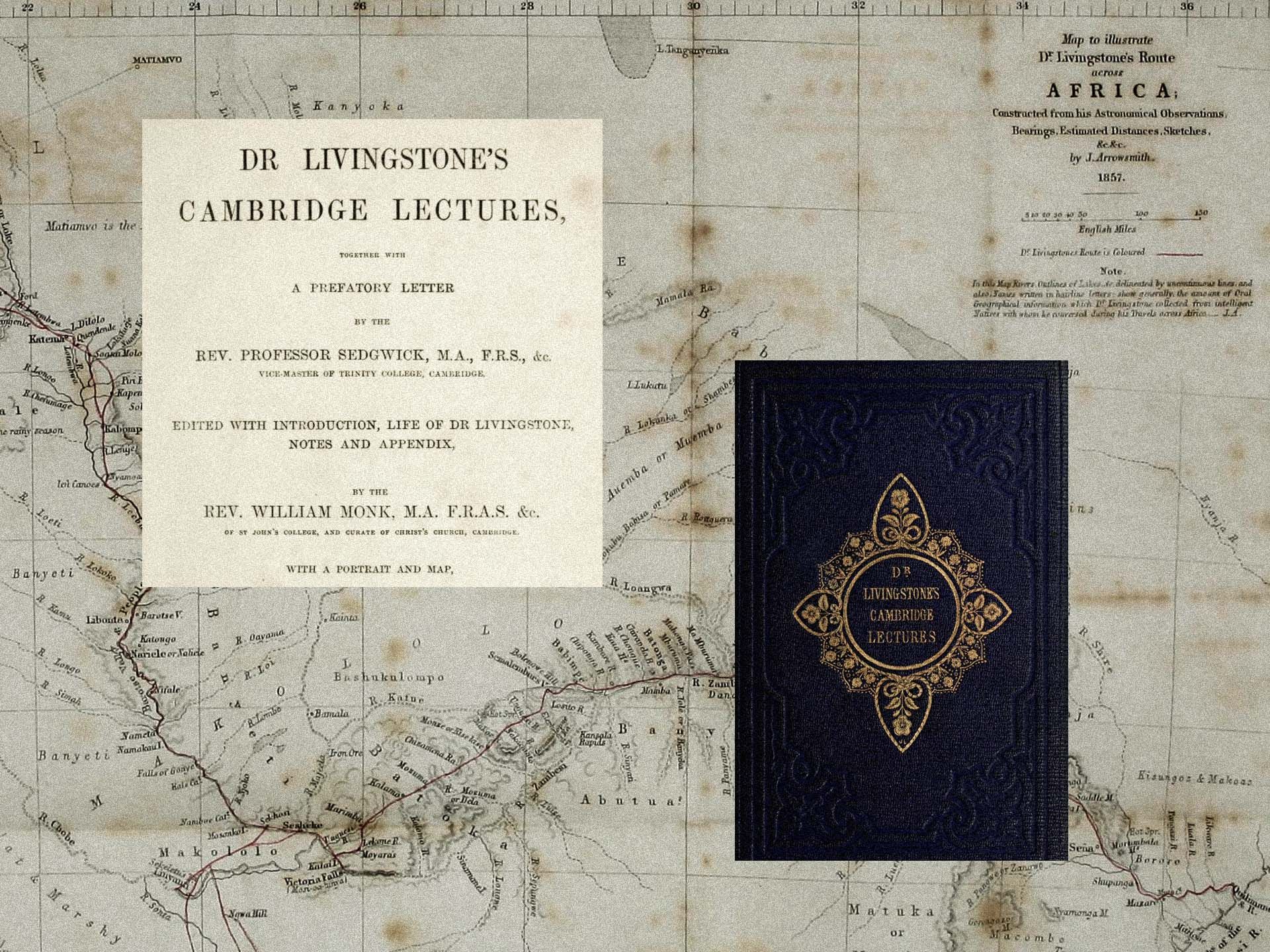
When missionary and explorer David Livingstone first returned to Great Britain in 1856 following his trek across Africa, he was celebrated for his discoveries and exploration as much as his ministry to the unreached. In some ways those former exploits have come to overshadow Livingstone’s status as a missionary. Yet, as the following excerpt shows, his journey, books, and his subsequent speaking engagements left a missionary legacy we’re too quick to dismiss
In 1858, Rev. William Monk put together a collection of Livingstone’s lectures at Cambridge alongside an introduction by Professor Adam Sedgwick and an appendix organized by Monk, based on Livingstone’s research and writings. The appendix contained writings on the history and science of Africa, but additionally had a section on the need for missions in Africa. The focus in that section is not on all the wonders of Africa or praising the discoveries of Livingstone and other explorers. Instead it focuses on the need for missionaries to go to the field and fight for God’s glory. Inspired by Livingstone, Monk encourages the training of potential missionaries, the need for the gospel, and overall the final victory that is assured. It is wisdom that was needed in the 1850s and remains so today.
Missionaries Wanted
“How beautiful upon the mountains are the feet of him who brings good news, who publishes peace, who brings good news of happiness, who publishes salvation, who says to Zion, ‘Your God reigns.’” Isaiah 52:7.
The cry for men does not proceed from one society, but from all. The supply hitherto has by no means been equal to the demand. This need of men must be more and more made known and discussed throughout the length and breadth of the land. It must be more prayed over, preached about, and made the subject of earnest concernment both with ministers and people.
A call came to Paul, in a midnight vision, stealing up from the cities and wilds of ancient Europe—”Come over into Macedonia and help us.” The Apostle heard and obeyed that call. A like cry in spirit reaches this land of Bibles, missionary societies and religious privileges—from all the dark places of the earth— “Who will show us any good?” Who will answer this invitation, so full of plaintive, earnest, absorbing, spiritual agony? The work among the heathen demands your men of a great battling spirit, earnest in prayer, and wrestling prevailers with our God. It will tax the best energies of the strongest frame, and find fitting employment and materials for the efforts and aspirations of the loftiest genius. Men of purpose, men of acquirement, men of spiritual mind, who love the Savior and His cause, men who can largely influence others by their very presence, and by persuasion, teaching and example; men who live in this world, and yet who are not of it, who are pilgrims and strangers here below—these are the men to answer this call. Such men need care but little about having no settled home now, for they have another, which hath foundations, whose builder and maker is God. Yes: such are the men to reply, "Here I am, Lord, send (not him—another—but) me."
Our universities are becoming more and more alive to this great work. They are national institutions, and this is a national duty for them especially to carry forward. In these time-honored institutions, the aspect of things pertaining to missionary responsibilities, privileges and enterprise, is rapidly changing, and will go on exactly in proportion to the activity and earnest prayerfulness of spirit evinced by their members.
Appalling and urgent are the spiritual wants, and continuous is the wail of a benighted world for peace, pardon, and acceptance with God. How shall this wail and how can these wants be met? What shall we do to increase the supply of men? Looking at these questions just now solely with respect to the fact that God does deign to work out some of even His grandest purposes through the instrumentality of human means, we appear to want more systematic and energetic missionary action in our universities, and increased means of familiarizing the mind with the reality of the work and its pressing needs. A greater familiarity with foreign countries, languages, races, manners, customs, and religions appears to be a great desideratum.
We would venture to suggest the importance of a good missionary museum, and reading room, containing an appropriate library comprising not only books treating directly and indirectly on the subjects under review, but also maps and atlases, as well as lexicons and grammars referring to the languages and dialects the most employed by missionaries in their intercourse with the heathen. To all this, copies of the Scriptures and prayer book printed in the same tongues might advantageously be added; together with a collection of autograph letters written home by missionaries and travelers, as well as a number of their portraits—the reports and current literature of the Home and Foreign Protestant Missionary Societies being added to all. Moreover, occasional meetings for prayer, conversational and general missionary purposes, carried on in strict subordination to academical duties and pursuits, must be highly important.
The frequent presence of eminent missionaries and travellers among such a body would also produce an effect of untold consequence. The strangeness and perplexity of idea pertaining to foreign lands and races would perhaps hereby be worn away more effectually by such intercourse than by any other means, except the fact of actually going to see, hear and feel for oneself.
Of course we bear in mind the truth that "the Lord of the harvest will thrust forth labourers into His harvest." But we know not in what way. His servants have to use all the means which they lawfully can to forward such an end, and then—not till then—to leave the result to him.
Go Not Alone
Facts prove this position. We are not to conclude that missionaries are sent into the work only by one irresistible impulse like Paul was. This is contrary to Christian experience in general. Many are doubtless so impelled to offer themselves for the work. But others are to be led to it—to be gradually prepared for it by intercourse with, and advice from, persons competent to influence and guide them. Henry Martyn to a great extent was so directed. Mr Simeon was instrumental in preparing—directly or indirectly—and sending out many missionaries. Dr Morison, Dr Medhurst and Dr Milne, all went to China at the suggestion and recommendation of others; so also did Williams to the South Seas. On the authority of an eminent clergyman, now living, it can be stated that the Rev. Henry Fox went out as a missionary on his recommendation. Such has been the experience of many living missionaries. We may conclude that this list can be greatly enlarged by making inquiries and receiving information on the subject.
Dr Livingstone, on visiting the reading-room of the Church Missionary Union, told the Editor of this book, that he himself belonged to a like Society in the University at Glasgow; observing that his mind was much influenced towards missionary work by intercourse with the members of that Society; adding, that he was one of five contemporary members, out of a small general body, who became missionaries. These facts are significant; and with their bare statement, we leave this unspeakably important subject for prayerful consideration, and God's blessing on it.
The Victory Won
"He which testifieth these things saith, Surely I come quickly. Amen. Even so, come, Lord Jesus." Revelation 22:20.
These means are, the word preached, and the word written.
The Missionary Societies are sending out their missionaries to preach the Gospel; and the Bible, and other societies, are scattering the written lively oracles of God over the whole earth.
That word preached shall not return unto the Lord void, but it shall accomplish all His purposes. Hereby shall Christ's Kingdom be enlarged and Satan's empire be destroyed.
When Bishop Selwyn spake memorable words in Great St Mary's Church, just before his return to New Zealand, somewhat after this manner; "Methinks there must be some spiritual electricity in this black cloud which now surrounds me—(waving his hand all round towards the dense array of Gowns)—which in the Lord's own time and way will go forth to the ends of the earth to do his Almighty bidding for the conversion of souls;" he was a true prophet. He spoke in faith, and that faith was answered. There are those now in the Mission field who heard and obeyed that call.
Hundreds will never forget that solemn thrill produced by Dr Livingstone's peroration to his Senate-House lecture, when waving his hand in the same manner as the Bishop—he retired amid deafening plaudits, abruptly stopping with that simply sublime appeal—"I leave it with you!"