The Forgotten Prayer
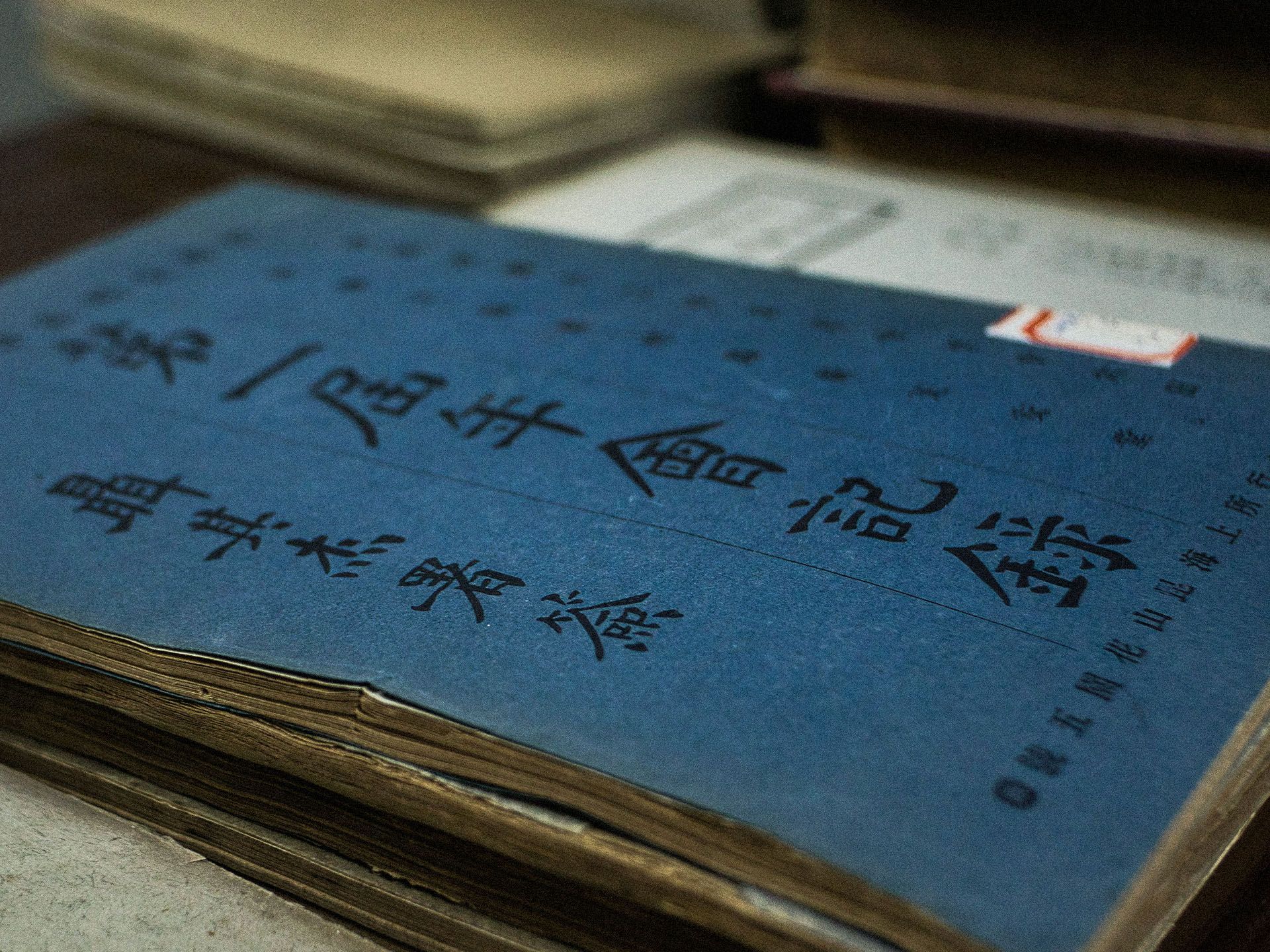
The memoir of our family’s missionary journey, The Most Unlikely Missionaries, begins with these words:
When we were growing up, if you had told either my wife or myself that our family would someday serve as missionaries in China, we would never have believed you… Some missionaries sense God’s hand on their life from a young age. Others find themselves drawn more slowly, by gentle steps, until one day you round a corner of the path… and find yourself in a different country. Our road to China was definitely of the latter type.
Almost none of the providences God used to prepare us for missionary service were obvious on the front end. Yet looking back, it seems clear that the Lord was weaving an intricate web in and around our lives. What did this look like for us? What points in our story might be helpful for others who may be wondering whether God is calling them?
The earliest antecedent in my own life was a concern for souls. I cannot honestly describe my youthful self as a serious Christian. But the preaching of the church in which I grew up clearly emphasized the reality of heaven and hell, the tragedy of eternity apart from Christ, and the consequent need of all people for Jesus. All this made a deep impression. I have distinct memories of reading The Hardy Boys detective novels and wondering whether the characters in the story were going to heaven or hell. As silly as this may seem, it strikes me as an early indicator of God’s work.
Another preparation, for both myself and my wife, was an interest in languages and different peoples. We grew up in rural central Pennsylvania, a relatively homogenous place in terms of culture and ethnicity. However, in our teens we both read and enjoyed the works of J.R.R. Tolkien and came away fascinated by the landscapes, languages, and societies he created. Tolkien’s imagination stretched our own, showing us the beauty of peoples, places, and speech that is different from our own.
Reinforcing this, in our early married life, I worked remotely from Pennsylvania for a software company based in southern California. This involved making regular trips to Los Angeles, and interacting with international coworkers and clients. Though this could be challenging for one whose upbringing had been relatively sheltered, it was also enjoyable.
This appreciation continued to grow in our early years of ministry, as the Lord called our family to plant a church in a Big Ten university town. During the years we served there, more than half the nations of the world had people in our community. We hosted people in our home from the Netherlands, Turkey, China, and Iran. We learned much from these experiences, including one time when our friend from Iran introduced us to the idea of pouring carrot juice over ice cream as a dessert! (Our family was more than a little apprehensive at this idea, but we were pleasantly surprised.)
Perhaps the most decisive moment, however, was a moment of missionary self-surrender. In 2015, I served as a commissioner to my denomination’s national meeting. During that meeting, I heard one of our church’s foreign missionaries present on his work in China. His presentation ended with an appeal that we pray for young men who would be willing to learn Mandarin and give their lives to China.
As I began to pray for God to raise up such “young men,” I was convicted by the thought that it would be hypocritical to pray this prayer if I were not willing, at least hypothetically, to volunteer myself. To pray like Moses, “Oh, my Lord, please send someone else” (Exodus 4:13), would be wrong. So instead, I prayed something like this: “Lord, I don’t see how it could ever work… but if You want, I’ll go. Amen.”
There were good reasons to think the Lord would not take me up on my prayer. We had just planted a church, and the congregation was still young, less than five years old. Moreover, we had five young children at home and modern China is not a society structured for large families. It was appropriate to make the hypothetical offer, and I meant it sincerely. But I did not expect it to take us anywhere.
It is a good thing to surrender yourself to the Lord: good, but not safe. Even as a hypothetical, I could sense the disruptive potential of my prayer. I suspected it would upset both my wife and my church elders, and so I told nobody. And because I did not talk about this prayer to anyone, I forgot it completely. For months, it was as if God had “hidden the file” in my memory.
What happened next was extraordinary. Despite having forgotten all about offering our family for China, less than two months later my wife and I made the decision that our family should start learning Mandarin. Our motivation was not a desire to move into foreign missions, but rather to cultivate a family hobby. We thought it would be fun to have a second language to use with our kids, and we believed Chinese would be an increasingly important language in the world as they grew up. On top of that, there was a large Mandarin-speaking community in our college town.
At the point we decided to study Chinese, my prayer of missionary self-surrender remained forgotten–– and yet here we were taking the first steps! Some months later, when I told our congregation that we had begun learning Chinese only as a hobby, one of our friends responded, “That is not a normal hobby.” And she was right! There is only one explanation: I had forgotten our prayer, but our God had not forgotten.
While this forgotten prayer stands out as the most significant moment of our internal call to missions, there was one further and equally important step: the external call of the church. The biblical model is not self-appointed missionaries, but missionaries sent by the church (Acts 13:1-3). Shortly after we began studying Mandarin, our denomination’s foreign missions organization learned of our language interest. About a year later, they asked us to consider going to China.
There was a lot to process in this request, both for us and for the congregation we served. Should we “let goods and kindred go,” even potentially “this mortal life also” to serve in a closed country? Did the needs of China outweigh the needs of the local congregation?
As we wrestled through discerning our call, the external call of the church was essential to distinguishing between selfish and godly ambition. However mixed our feelings, the fact was that I had forgotten the prayer: we had not put ourselves forward. The decisive action came not from us, but from the church. In the end, we did not take ourselves to China. The church sent us.
As I reflect on all this, I cannot help but think of the words of John Flavel: “Sometimes providences, like Hebrew letters, must be read backward.” The forgotten prayer incident stands out as extraordinary. However, most of our call to missionary service was far less fantastical: a combination of natural interests, regular providences, and ordinary decisions.
For those wondering whether they may be called, I suggest a simple test: offer yourself to the Lord, without expectation and without reservation. “Into your hand I commit my spirit” (Psalm 31:5) is the perfect prayer of faith for every Christian at any moment. It is therefore also a perfect prayer of self-surrender with regard to missionary service. Do not assume God needs you, and do not try to dictate terms to Him. Simply give Him your heart, your family, and your destiny and trust Him to lead you wheresover He will. Even if you eventually or mysteriously forget making such a prayer, God will not forget.