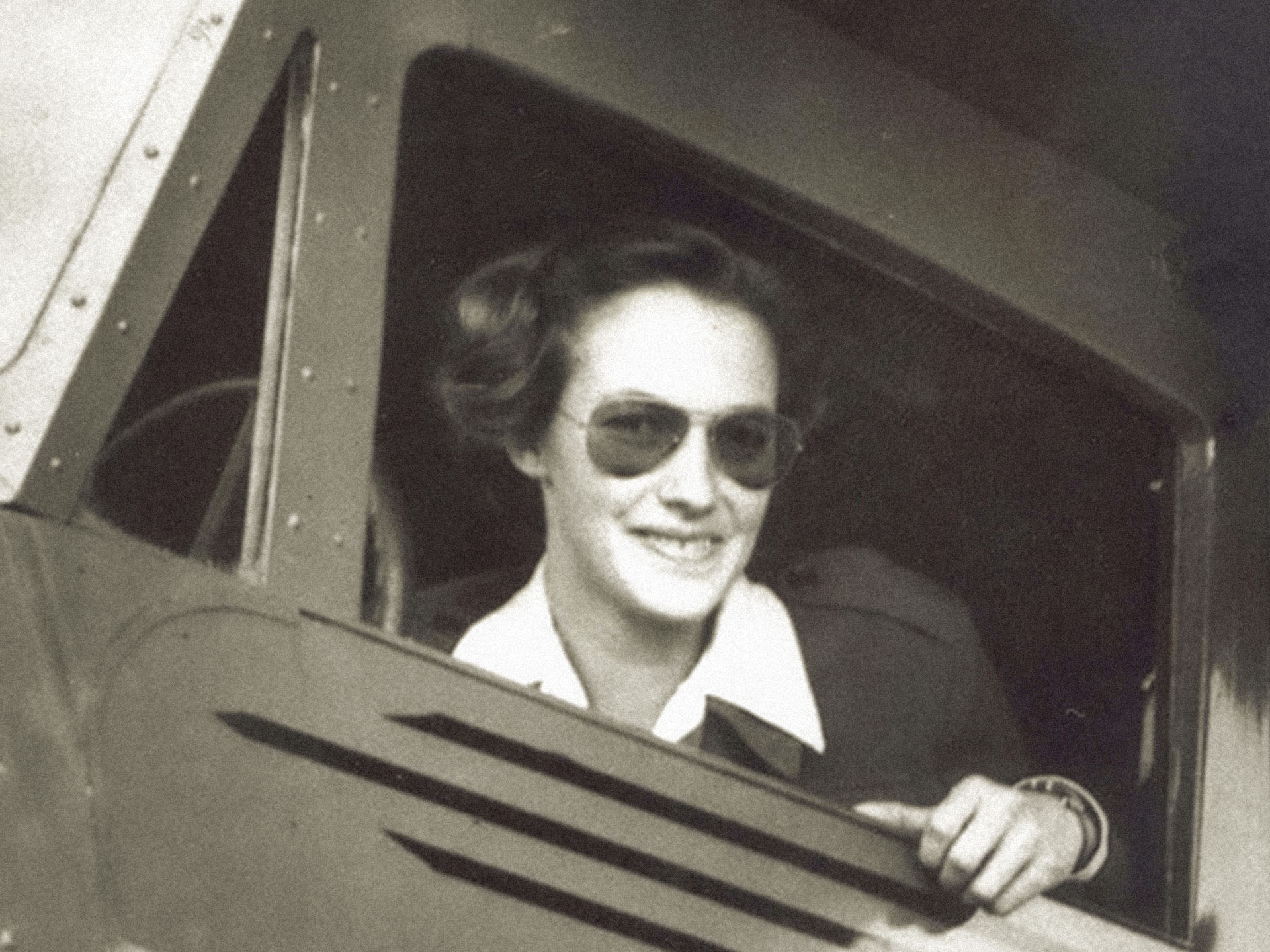
Young Aviator
Elizabeth “Betty” Greene was born in Seattle, Washington in 1920; she and her twin brother were the youngest of the four Greene children. Betty’s parents sought to instill a strong faith in their children, several of whom eventually entered Christian work. From a young age, Betty was fascinated by flying, and she found inspiration in famous aviators such as Charles Lindbergh and Amelia Earhart. As a teenager she learned to fly and was soloing by the age of sixteen.
During World War II, Betty joined WASP (Women Airforce Service Pilots) where she learned to fly military planes and experimented with high altitude aviation. Around this time, Betty wrote an article describing her desire to be a missionary pilot. In the article, she explained how her military pilot training was preparing her to live “all out” for God and to trust God’s Word more than her own feelings. She also expressed her longing for God’s glory to be displayed through missionary aviation: “I find myself longing and praying that God will use the airplane not only in spreading the gospel to the ends of the earth but to help strengthen the whole Body of Christ.”
Missionary Aviation Fellowship
In 1945, Betty cofounded the Christian Airmen’s Missionary Fellowship which later became Missionary Aviation Fellowship (MAF), an organization that sought to use aviation to reach challenging areas of the world through the easier transport of workers and supplies. In 1946, Betty embarked on MAF’s first mission when she flew two Bible translators from California to Mexico City in her Waco Standard Cabin biplane. Soon after, she flew Cameron Townsend (founder of Wycliffe Bible Translators) to a remote jungle camp.
Betty went on to fly for sixteen years with MAF, completing over 4,000 flights and consistently traveling in twelve countries, often risking her life in uncharted and dangerous territory. The experience she acquired during her years with WASP aided her well, though many times she learned on the job as she flew over tropical regions. In 1962, she transferred to a recruitment and training role at MAF headquarters.
Legacy
Betty died in April 1997 after a life full of daring adventure for God. She is remembered in part for being the first female missionary pilot and for gracefully navigating the male-dominated world of aviation. Betty herself carried concerns about women pilots, primarily because many women did not have the life-saving mechanical and technical skills necessary to repair airplanes, and MAF missions often involved moving heavy cargo. Further, many solo missions placed women in potentially dangerous situations. However, despite her achievements as a women pilot, Betty is ultimately remembered for her devotion to Christ and the joy she experienced when she “flew with Him,” submitting her plans and desires to the goodness of His sovereign will.