Preparation for the Jungle
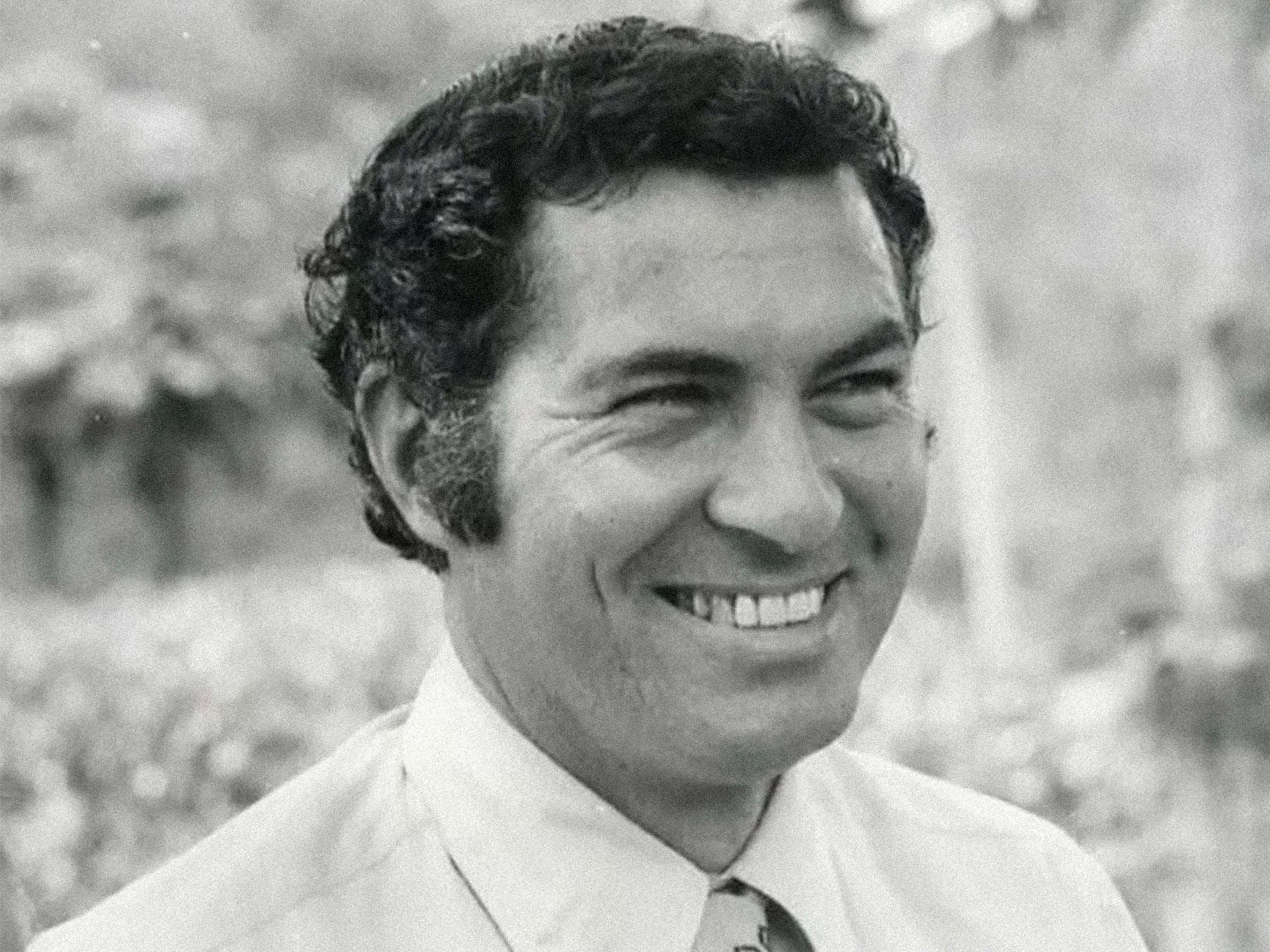
Don Richardson was born in Charlottetown, Prince Edward Island, Canada on June 23, 1935. Richardson was 11 when his father died, an event that certainly must have prepared him to be compassionate to those in need. His life was destined to be one of ministry that would help to save a whole culture.
Richardson dedicated his life at age 17 at a Youth for Christ rally in 1952 and from then on pursued missions as his life purpose. He attended Prairie Bible Institute in Alberta, Canada. When he was 20 years old, Richardson listened to an elderly missionary speaking at the college. The missionary spoke about stone-age lost tribes in 110,000 miles of swamps, jungles, and mountains of Indonesia. The tribes were discovered by American pilots stationed in New Guinea during the war against Japan, flying over the jungles and spotting villages nestled in the trees.The missionary pleaded with his listeners, “How much longer must those lost tribes wait to hear of Him who died for their salvation and rose again nearly two thousand years ago?”
Richardson was burdened for these tribes and listened to God’s call. A student in the same auditorium, Carol Joy Soderstrom, was similarly burdened with the call. In 1960, the two were married and graduated together. They would have four children.
The Sawi and the Peace Child
In 1962, the couple and their seven-month-old baby boy moved to Western New Guinea, Indonesia, traveling through jungles and up rivers on a small canoe paddled by Sawi tribesmen.Eventually, they reached a Sawi village, where they were welcomed. The Richardsons lived and worked for 15 years with the Sawi, a tribe of cannibal-headhunters who idealized treachery as their highest virtue. The Institute in Basic Life Principles describes the Sawi’s customs: “They admired the man who could ‘fatten his enemy with friendship for the slaughter.’ The tribal people practiced witchcraft. Sawi children venerated the tribal elders who had killed men in combat. In fact, the skulls were given to small children to play with as toys!”
The Richardsons began right away to learn the Sawi language and treat the myriad of jungle illnesses. Carol, a registered nurse, was known as “the woman who makes everyone well.” Death and funerals were frequent. The majority of babies died before reaching childhood, a great sadness for the parents who treasured their children. Carol helped the Sawi physically, as they flocked to her clinic.
Richardson traded steel tools, which worked better than the tribe’s stone tools, in exchange for help to build his family’s house. He began with sign language, but after 10 hour learning sessions per day, became proficient in the complex Sawi language. He designed an alphabet, which had 19 tenses for every verb! Carol held reading lessons for the villagers along with her clinic.
Once they learned the language well enough, Richardson sat down with the people and told the story of the Good News. However, as a tribe that valued treachery above all else, they saw Judas as the hero, and Jesus as a fool who trusted his enemy. No one would understand the message of Jesus. Richardson was discouraged, and prayed for wisdom to know how to help the tribe understand.
A war broke out between two Sawi tribes. One was avenging the blood of a man the other tribe killed. Fighting lasted for months as the Richardsons tended the wounded. They didn’t know how to communicate the concept of peace when bloodshed was all the Sawi knew. The gulf separating the Sawi worldview and theirs was too big. Men were dying outside their door. Something had to be done.
Richardson gave an ultimatum: either the chieftains stopped the fighting or the Richardsons would move to a different village. The tribe wanted the medicine and steel tools to stay, along with the Richardsons. The tribes decided to make peace.
Richardson was baffled as he witnessed a custom that might be the key to reaching the Sawi hearts. Esai, the chieftain of the Richardsons’ home tribe, painfully took his only newborn son from his wife. Each warrior touched the child, and then the child was presented to the other head warrior as the peace child. As long as the child lived, there would be peace and all grievances would be forgotten.
Richardson realized that this ritual was the means of helping the Sawi understand the Gospel. The peace child God sent, Jesus Christ, will never die. He came to make peace with us, who warred against Him. This redemptive analogy was the key to opening the Sawi hearts. Esai, who gave his own son for peace, became the first Christian and told the rest of the tribe about the ultimate Peace Child.
A church was erected by the Sawis’ own hands—a God house. Esai became one of the lay preachers, and the church grew as surrounding tribes turned from treachery to peace with Christ. They worshiped in the church in unity. Richardson worked with the tribesmen to translate the New Testament into the Sawi language. The love of Christ flourished in the villages, and the tribes grew to love and trust each other.
Legacy
In 1977, 15 years later, the Richardsons returned to the United States.. Richardson wrote books and traveled, speaking about redemptive analogies and how the Gospel is already hidden in everyone’s hearts. His most well known book is Peace Child, the story of how the Sawi custom brought the Gospel to light. He was World Team’s minister-at-large as an ordained pastor and held an honorary doctorate of literature from Biola University
Richardson moved to Pasadena, CA, where he taught and wrote. Carol died after 43 years of marriage in 2004. Richardson remarried to Carol Joyce who continued to help him in ministry. Among other interests, Richardson was a skilled painter of tribal life in New Guinea, each painting with a story.
After 50 years, Richardson and his three sons who grew up in the jungle, Steve, Shannon, and Paul, returned to the Sawi village where they landed decades earlier. They documented the reunion in a short film, Never the Same. Hundreds and hundreds of people from five different tribes arrived together, instead of fighting, to welcome the Richardsons back. Peace and love were tangibly felt. The Sawi tribe who had lived with the Richardsons are now a base for sharing the Gospel with other Sawi tribes nearby. While there, Richardson helped baptize 325 new believers into the thriving church. His legacy has continued in the deep Indonesian jungle, and around the world, through the Gospel of Christ.
Richardson died on December 23, 2018 from brain cancer. He was 83 years old. His children continue his mission and the story of the Peace Child reaches people with the Gospel around the world.