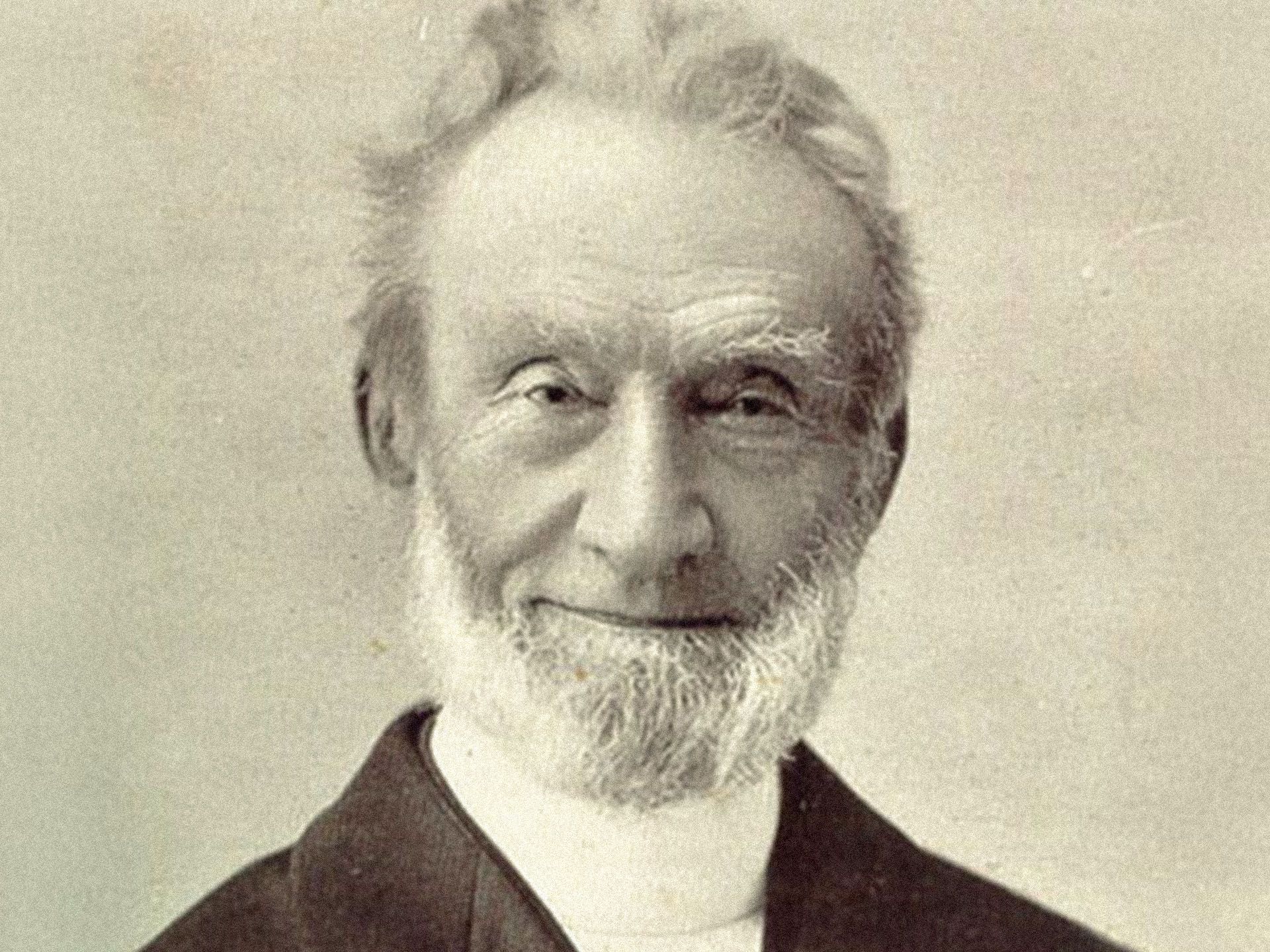
George Müller was a man with a colorful past and a bold faith. Best known for his life of prayer, Müller never publicly asked for money or went into debt. Throughout his life, he founded 117 schools and cared for over 10,000 orphans, but rather than soliciting support, he prayed and trusted the Lord to provide for every need. He concluded that “faith does not operate in the realm of the possible. There is no glory for God in that which is humanly possible. Faith begins where man's power ends.” Müller’s story inspires us to trust the Lord in prayer, confident that He will provide.
Early Years
George Müller was born in Kroppenstädt, Prussia, in 1805. As a child, he was clever and mischievous, often using his creativity to indulge in sin. His father, a tax collector, gave his children a great deal of money given their age, but Müller always wanted more. By the age of ten, he was regularly stealing government funds. Even when he was caught and punished, Müller did not seek to change his ways. Instead, he sought new ways to avoid detection.
Around this time, Müller was sent away to school. His father wanted him to become a Lutheran minister, not for spiritual reasons, but instead to secure a life of stability and respect. But even while preparing for ministry, Müller lived for world pleasures. He read cheap novels, drank heavily, and sought worldly entertainment with friends. On the night his mother died, he was playing cards, and the next day (a Sunday), he went out drinking at a local tavern. For his church confirmation, Müller even stole some of the money his father gave him for the priest.
After his confirmation, Müller resolved to stop sinning, but his efforts faded quickly. At sixteen, desperate and out of money, he tried to flee an inn without paying his bill by climbing out a window. He was caught and put in jail for twenty-four days. On the second day, Müller asked for a Bible, not out of interest, but simply to pass the time.
In 1822, Müller resumed his studies and applied himself academically, but his heart remained far from the Lord. At one point, he even fabricated a robbery to receive financial help, showing how deeply entangled he was in deceit.
A Radical Transformation
At age twenty, Müller began preaching to the church, even though he was not yet a Christian. This all changed in 1825, when a friend invited him to a prayer meeting at a small cottage. Deeply moved, Müller later said it was the happiest he had been in a long time. Soon after, he began praying, reading Scripture, and repenting of his sins.
By 1826, he desired to become a missionary. Müller wrote to his father, expecting a joyous response, but instead received an angry admonition to settle into a stable ministry profession. Müller chose instead to trust the Lord for provision and broke from his father’s financial support. Compelled to share the gospel, he went to London in 1829 to work with a missionary organization to the Jews, but illness and organizational delays redirected his plans. After preaching at a nearby church, he was invited to serve as their pastor.
A year later, Müller married Mary Groves, the sister of a dentist who had inspired him to live without a salary, trusting instead in the Lord’s provision. Inspired by this example, Müller also declined a salary, relying on anonymous freewill offerings placed in a box at the back of the church. He also ended the unbiblical practice of renting pews, which had tied church privileges to wealth.
Later, Müller moved to Bristol to become the pastor of Bethesda Chapel. Despite many times of financial lack, he never directly asked for help. Each time, the Lord provided, though often in unexpected or surprising ways. In 1834, Müller expanded his ministry by founding the Scriptural Knowledge Institution for Home and Abroad, which supported missionaries, established day schools, and distributed Bibles.

Ministering to Orphans
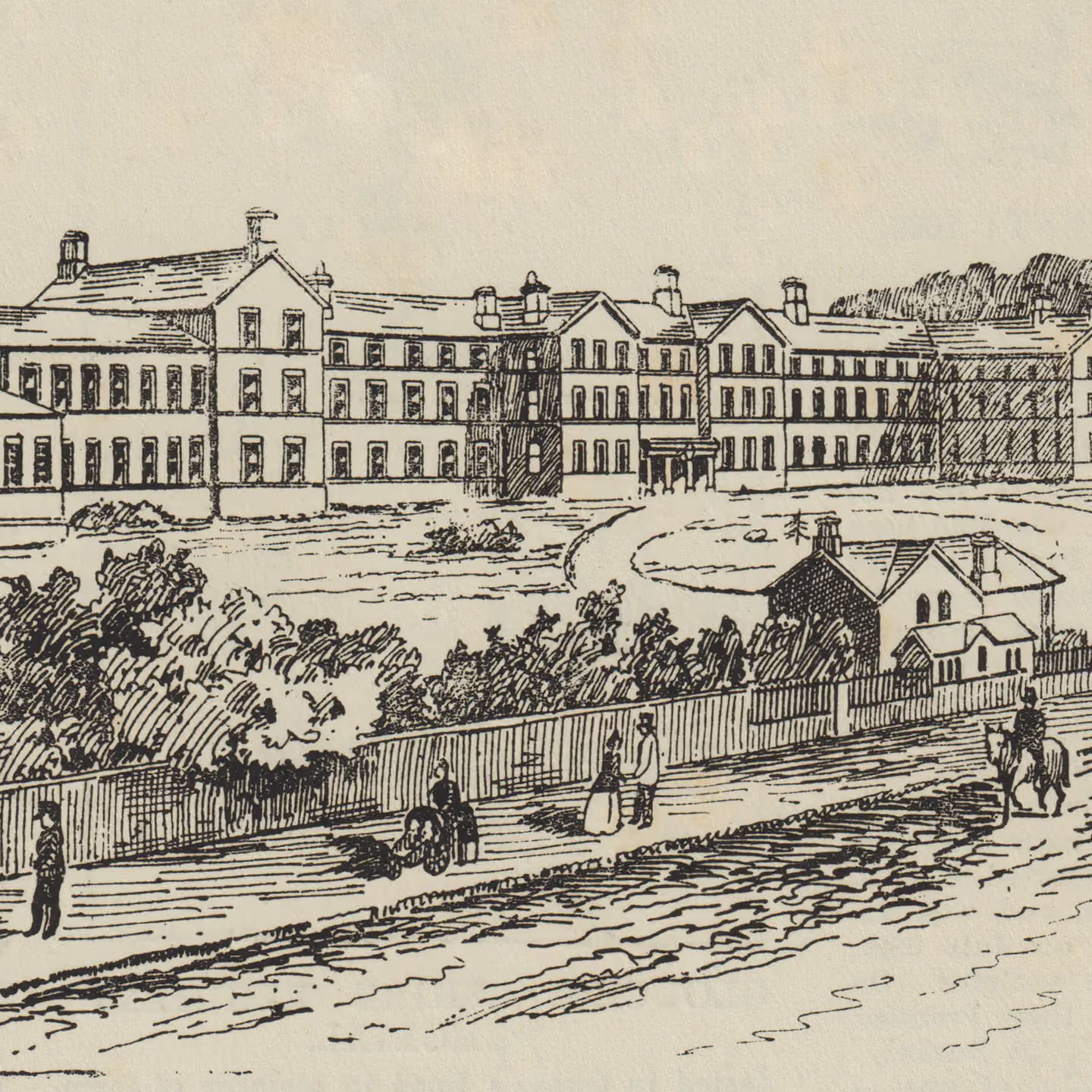
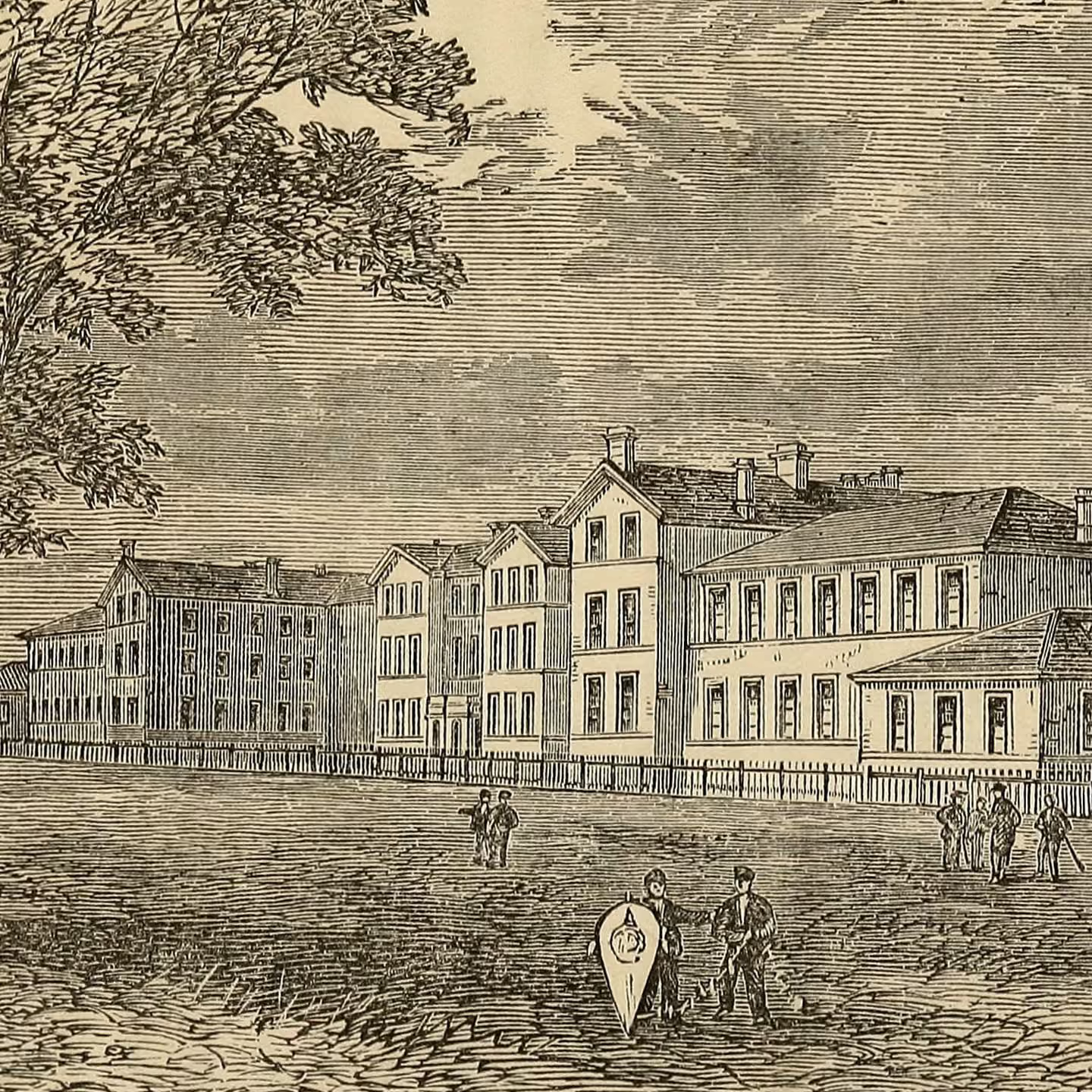
In 1836, Müller and his wife opened their first home for orphans, beginning with thirty girls. The work quickly expanded to include hundreds of children. Müller oversaw the construction of five large orphan homes in Bristol, costing over 100,000 pounds, yet he never solicited funds. The Lord faithfully provided every need through prayer.
The orphanages provided not only food, shelter, and education, but also spiritual discipleship. One well-known story tells of a day when the orphanage had no food left. Müller gathered the children down to pray and give thanks to the Lord, and moments later, there was a knock on the door. It was the town baker, offering fresh bread for the children. Shortly after, there was another knock, this time from the milkman. His wagon had broken down in front of the orphanage, and he donated the milk before it spoiled. Through such examples, Müller not only provided for the physical needs of the children, but also discipled them in prayer and dependence on the Lord.

A Lasting Legacy
In his later years, Müller traveled extensively, testifying to God’s faithfulness in answering prayer. Until the end of his life, he lived in humble dependence on the Lord. He read the Bible over two hundred times in his lifetime, a hundred of which were while on his knees in prayer. Müller died on March 10, 1892, at the age of ninety-two. His funeral was attended by 10,000 people, including 1500 orphans who had been under his care.
Müller’s orphanages remained open for nearly 150 years, caring for close to 18,000 children and providing Christian education to approximately 120,000 students. He also helped distribute over 250,000 Bibles and support missionaries, including Hudson Taylor.
Throughout his life, Müller saw the Lord provide in miraculous ways. His legacy endures as a reminder that God hears and answers prayer.
Additional Resources:
- Read his autobiography.
- Read more about him.