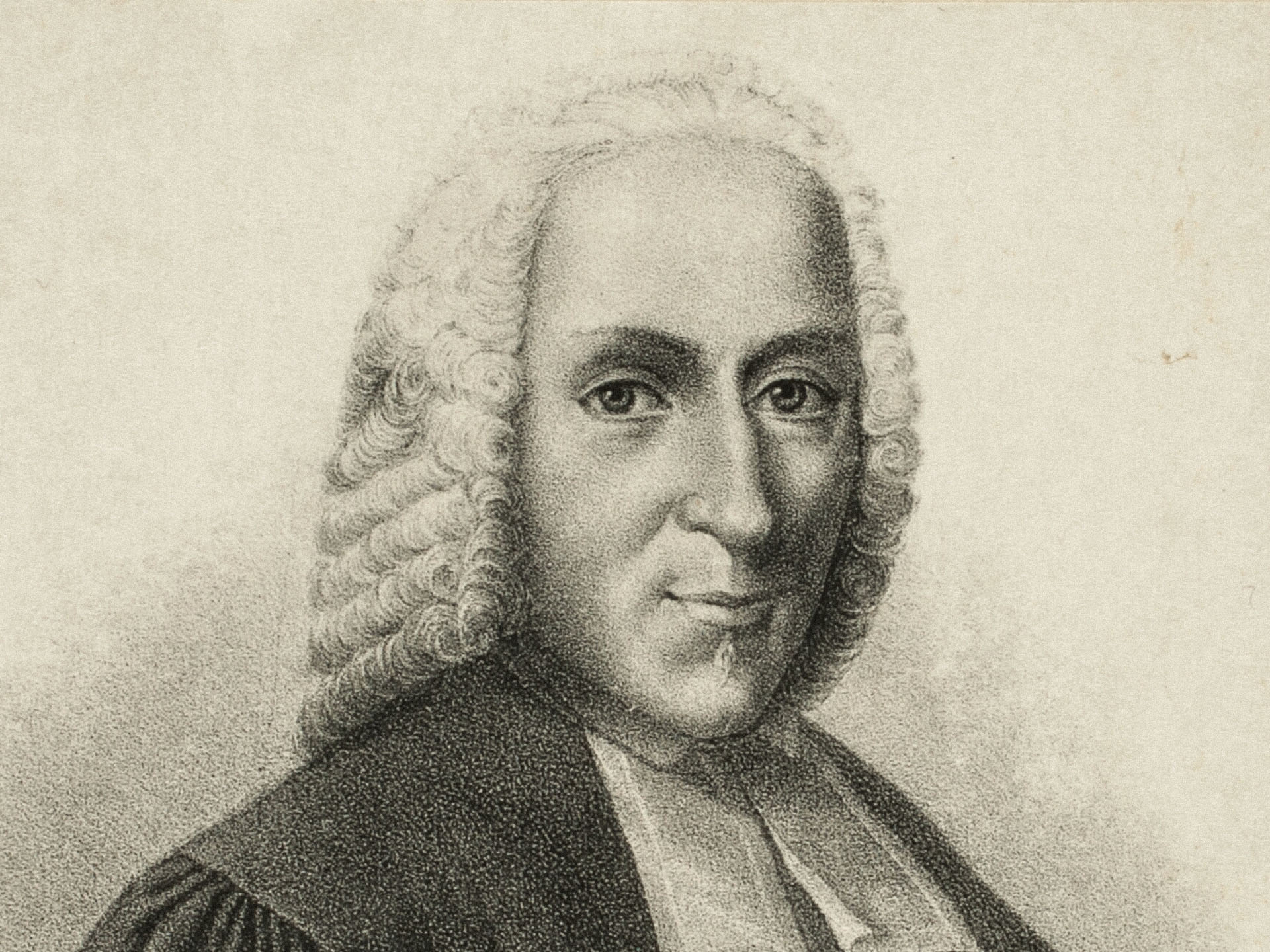
Hans Egede is known as the “Apostle to Greenland.” A Norwegian Lutheran priest, he helped lay the foundation for Christianity in Greenland, enduring grueling and perilous conditions with little outside support. As one co-worker said of him, "He wished to live and die here in order to teach the savages the knowledge of God…. He only tries to work for the honor of God even if it should cost him his life…such a man is worth his weight in gold.”
Early Years
Hans Egede was born on January 31, 1686, several hundred miles north of the Arctic Circle in modern-day Norway. His father was a civil servant, and many of his extended family were connected to the church. His grandfather had been a vicar in Zealand, Denmark, and his uncle, who later educated him, served as clergy in the Lutheran church.
At eighteen years old, Egede moved to Copenhagen to study theology. He was ordained in 1707 and afterward was assigned to the remote region of Lofoten. That same year, he married Gertrud Rasch, and they eventually had four children together, two boys and two girls.
While at Lofoten, Egede heard stories about the lost Norse settlements in Greenland, which had vanished centuries earlier. These reports stirred his imagination and awakened a desire to bring the gospel to the people living there. In 1711, he wrote to King Frederick IV of Denmark-Norway requesting permission to find these settlements and evangelize the inhabitants. He wrote, “All Christians have a duty toward missions so long as any heathen exists. Christians will be called severely to account if they content themselves merely in carrying on in trading with the heathen."
The king granted Egede authority for the expedition, including the right to govern, maintain a defensive force, and administer justice in Greenland.
Life in Greenland
After years of preparation, Egede was ready. On May 2, 1721, Egede and his family, along with forty colonists, set sail on two ships. The voyage was dangerous, requiring them to navigate around icebergs and hazardous waters. After nearly three months at sea, they reached Greenland and established Hope Colony. Although Egede searched diligently for Norse colonists, he found none. Instead, he encountered the Kalaallit, the Inuit people of Greenland.
Together with his family, Egede quickly began learning the language, documenting the land and culture. On his first Sunday, he held a worship service, proclaiming the words of Psalm 117:1, “Praise the Lord, all ye heathen, praise him all ye nations.” Though no Inuit attended, Egede persisted in preaching, teaching, and learning the language.
Difficult Conditions
The conditions in Greenland were extremely harsh for the settlers. By winter, many colonists had contracted scurvy and returned home. Supply ships arrived in 1722, allowing Egede to continue his work, though he still found no Norse settlers. Instead, he established a whaling station to support the colony.
Despite his many hardships, Egede continued to minister faithfully. Three years after his arrival, he baptized his first Inuit converts. Incredibly, two of these early Greenlandic believers later traveled to Denmark and helped to inspire the Moravian missions movement.
In 1728, another royal expedition arrived with supplies and established Fort Good Hope. These supplies allowed Egede to build a chapel, but another outbreak of scurvy killed many and led them to abandon the settlement.
In 1729, Egede wrote the book, The Old Greenland's New Perlustration, a significant work that was later translated into several languages. Shortly thereafter, however, the king, who was disappointed that no Norse descendants had been found, decided to recall the mission. It was at this time that Egede faced a difficult dilemma: Would he return home, or would he stay and continue his work? He chose to stay and continue ministering to the people of Greenland.
Four years later, a ship brought more supplies and three missionaries. This group was given permission to establish a new colony. But around this time, tragedy struck, and Egede’s wife died of smallpox. Egede returned to Denmark to bury her, leaving his son, Paul, to continue the mission. While in Copenhagen, he was appointed Superintendent of the Greenland Mission Seminary and later became the Lutheran Bishop of Greenland.
Egede died on November 5, 1758 in Falster, Denmark. After his death, Egede’s family continued to minister in Greenland. His grandson later became a missionary to Greenland, publishing one of Egede’s diaries while there.
Legacy
Egede is remembered as the “Apostle to Greenland,” and he remains an important national figure there. A lunar crater is also named in his honor, and in 1916, the Royal Danish Geographical Society established an award, known as the Egede Medal for Geographical Studies and Research in Arctic countries. But most importantly, through his ministry, Hans Egede helped to establish the Christian foundation of Greenland. He sacrificed comfort and security in order to minister in a harsh and isolated land, leading many to trust in Christ and find everlasting life.
Additional Resources
- Read his description of Greenland.
- Read a biography.