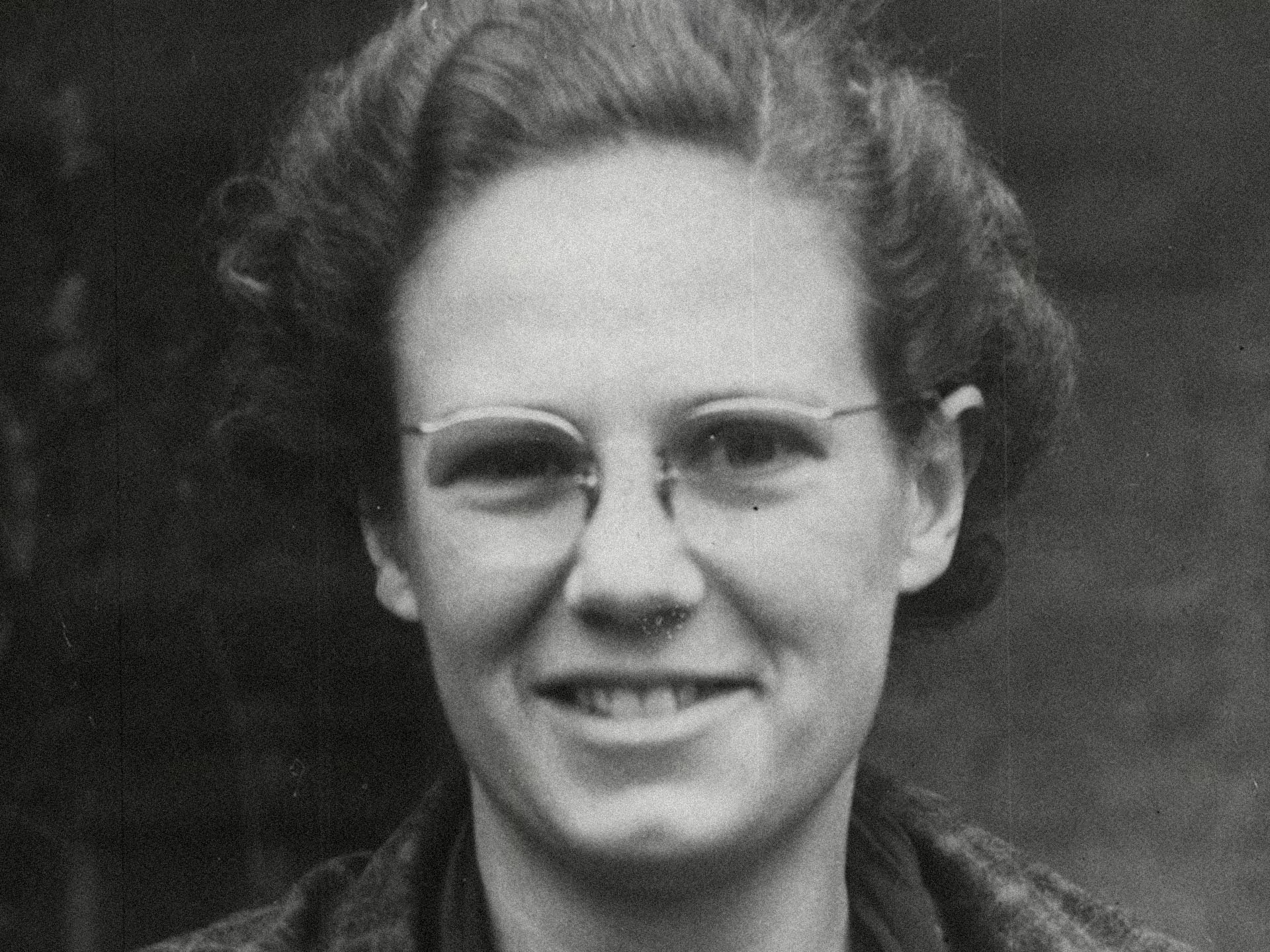
Early Life
Helen Roseveare was born on September 21, 1925, in Hertfordshire, England. At a young age, she displayed an independent, strong spirit and a sharp mind. She studied at Belfast University, focusing on medicine, and there she became involved with Cambridge Inter-Collegiate Christian Union (CICCU), a student Christian organization that nurtured her sense of vocation. During her years at medical school, she felt a growing conviction that her skills should be used for Christ’s service in other countries.
Missions and Medical Work
After graduating in 1953, she joined the Worldwide Evangelization Crusade (WEC) and was assigned to the Belgian Congo (currently the Democratic Republic of Congo). Arriving in 1953, she entered a land still under colonial rule. Her early work was at a small mission hospital in Nebobongo, where she provided what care she could in a place of overwhelming need. Propelled by compassion and a formidable work ethic, she built clinics, trained nurses, and treated thousands of patients.
Her medical mission, however, was never separate from her evangelistic vision. “I wasn’t called to Africa for the sake of the Africans,” she once said. “I was called to serve Jesus there.” For Helen, treating bodies with medicine was a means of honoring God as the grand Healer of souls. Her hospitals became places of prayer, not just of medicine.
In 1958, she was furloughed to England. There she completed additional medical training, and then she returned to Congo to found a new hospital and medical training center in Nyankunde. Her dream was to create a fully indigenous medical service. To that end, she worked tirelessly, often sixteen hours a day, combining surgical skill with deep spiritual mentorship.
War and Suffering
But her ministry found itself in the turmoil of war. In 1960, Congo gained independence, and the nation descended into political chaos and war. During the Simba Rebellion of 1964, Helen and several other missionaries were captured, beaten, and imprisoned for months. She endured brutality and sexual assault. And yet she would talk about this trauma with extraordinary grace. In her writing and speeches, she described how Christ’s presence sustained her: “He didn’t stop the suffering; He met me in it.” Her honesty and forgiveness became a powerful testimony to the cost and beauty of discipleship.
After her release and return to England, Helen continued to combat her trauma and suffering from the Simba Rebellion. Eventually, her great suffering deepened her understanding of God’s love, patience, and self-giving. “He asks for our everything,” she wrote, “but in return, He gives His everything.” Her book Give Me This Mountain (1966) outlines her years in Africa before the rebellion, while He Gave Us a Valley (1976) reflects on her suffering and deepened understanding.
In 1966, she returned to Congo, helping rebuild the medical work destroyed by war. She continued teaching, writing, and speaking internationally after retiring in 1973, urging young Christians to embrace costly obedience.
Contribution to Missions
Helen Roseveare’s contribution to Christian missions includes her extensive medical work and her theology of suffering and service. She showed that missionary work is not triumphalism but participation in the cross, suffering with Christ (Philippians 1:29; 3:10–11). Her willingness to forgive her captors and to continue loving the people who had harmed her embodied the heart of the gospel.
She spent her later life building up students and missionaries through conferences with the Keswick Convention and the Urbana Missionary Convention. Wherever she spoke, she reminded listeners that God’s call is not to comfort but to Christlikeness, even in suffering. “Are you willing to be expendable for God?” she would ask.
Helen passed away on December 7, 2016, at the age of 91. Her legacy endures in the hospitals she founded, the lives she healed, and the faith she rekindled in others. Through her witness, countless believers have learned that true mission is born not of heroism but of surrender to God in the midst of suffering.