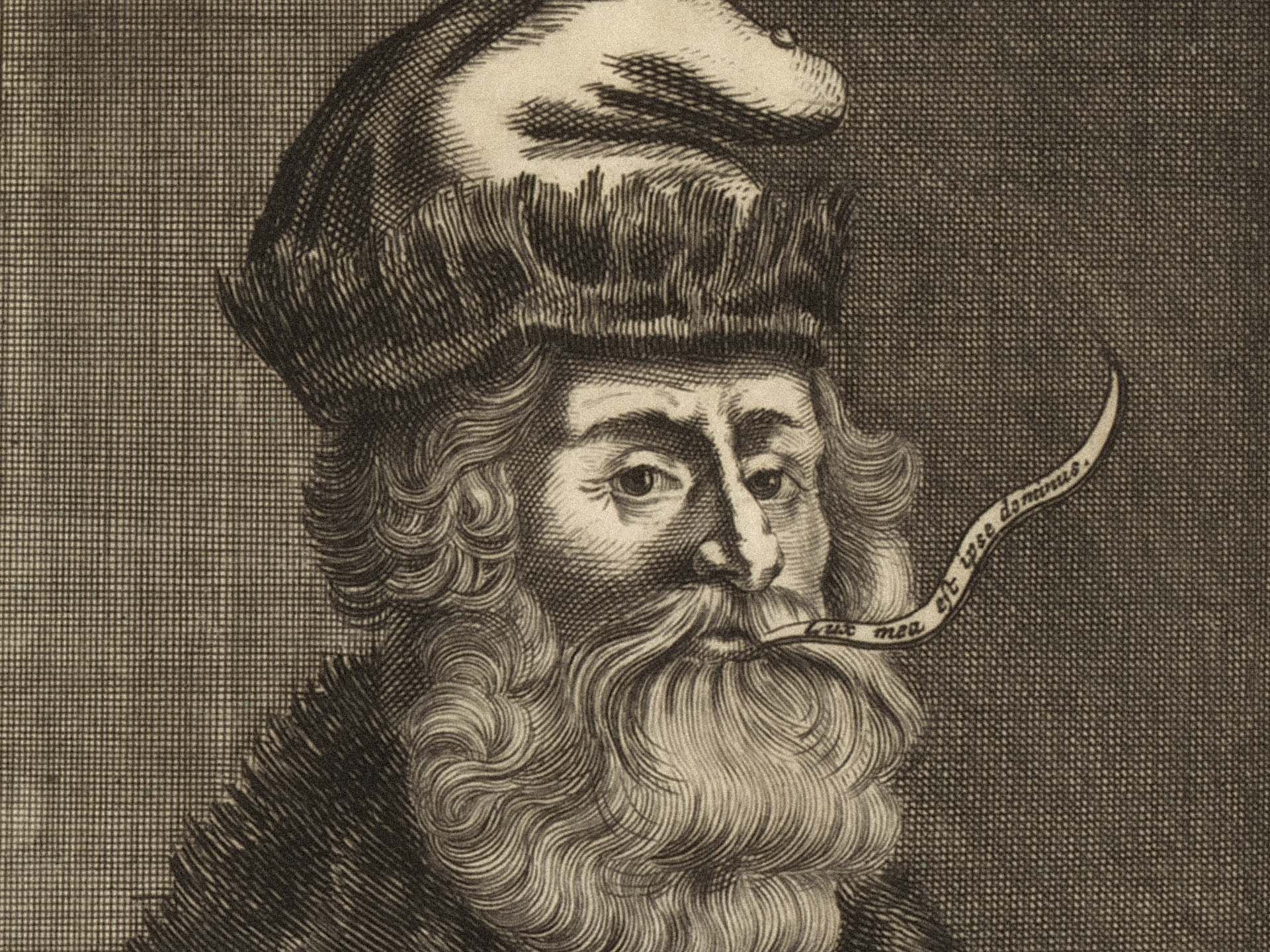
Between Paul’s missionary journeys and the advent of the “modern missions movement” in the 18th century, there may have been no greater influence on the organization of Christian missions than Ramon Llull.
Sources conflict on his date of birth, but Llull was born on the island of Majorca between 1232 and 1235. Like many of his contemporaries, the facts of his youth are difficult to discern, but we know that he was either employed at the Court of Aragon in Spain, or in the employ of his family business until he married and fathered two children.
The young Llull was irreligious at best and likely a hedonist. But, in 1257, he was dramatically converted. Inspired by Francis of Assissi, he abandoned his life of sin and, providing some support for his family, left all he knew behind to devote himself to study. Though Llull had no formal theological education, and it is not clear that ever formally joined a religious order, his sole aim became the conversion of unbelievers, specifically Muslims. Lull’s was the era of the crusades, and Islam influence remained in his homeland of Spain. The work of Muslim scholar Averroes had even begun to make inroads at the Sorbonne. The timing could hardly have been better for a concerted effort at conversion.
Though Llull’s ambition of converting the Muslims was shared by many in Christendom, his approach was to be uniquely prescient. He understood that, in order to engage with Muslims, missionaries would need to be trained to fluency in their language of Arabic. Through numerous writings and lobbying at court, in 1276 Llull saw the establishment of a monastery with the express purpose of training missionaries for cultural engagement with Muslims. Though many of his works are now lost, it’s believed that he wrote more than 200 works, chief among them the Ars, a complex apologetic intended to convert Muslim and Jewish intellectuals and to unite the faith of Christians.
But Llull’s method was not purely intellectual. In 1291, after more than a decade of studying both Latin and Arabic, and debating Muslim and Jewish thinkers, Llull attempted his first mission to Tunis. He was nearly 60 years old. Almost immediately, the aged Llull was imprisoned for confronting the Islamic view of God. He later tried to reach Syria in 1301, but got no farther than engaging with the Eastern Orthodox churches there. Finally he attempted to bring the gospel to the holy land through North Africa. There, in Bugie, he was imprisoned again, this time for half a year. He would travel once more to Tunis and then to Bugie again, where he was martyred.
Llull saw few converts on the field, but his insistence on an intentional program of preparation for missionaries was ahead of its time. There are aspects of Llull’s biography that are difficult to justify, such as his apparent abandonment of his family, and other mystical and hagiographic aspects that are typical of the era. In any case, his early efforts helped to establish a template for effective missions to follow, a philosophy that shared tenets with later post-Reformation theologians like Gisbertus Voetius. By establishing missionary schools, Llull ensured that the missionaries who were sent would be fluent in language and culture—traits that remain hallmarks of biblical missions to this day.