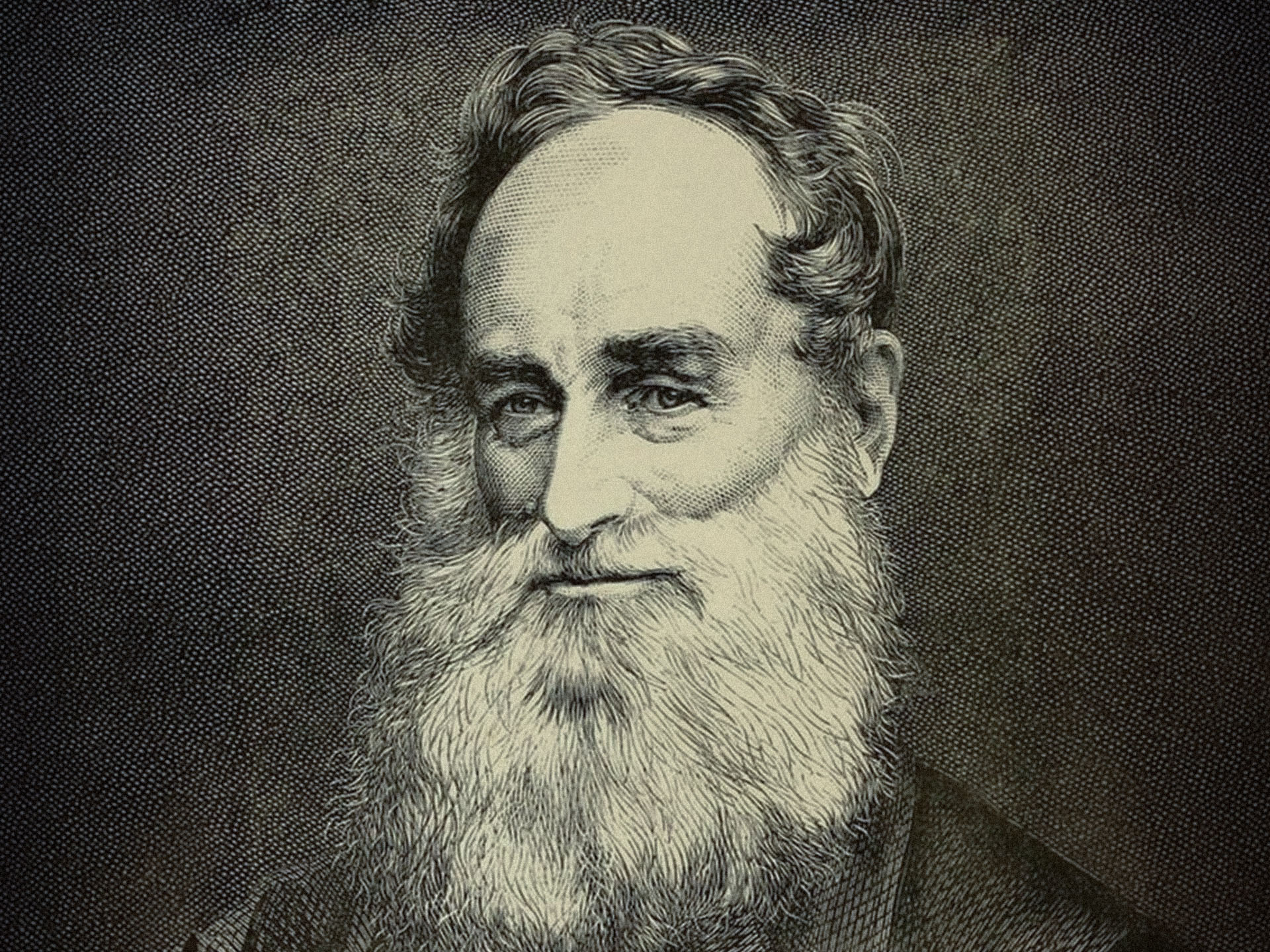
Robert Moffat was a Scottish missionary to South Africa. Despite enduring tremendous hardships, Moffat served for over fifty years as a minister of the gospel, faithfully and bravely sacrificing much for the sake of the gospel. He considered his greatest accomplishment to be the translation of the Bible into the local language—a work that took him more than thirty years. His life powerfully demonstrates the value of perseverance and endurance wherever God leads us.
Early Life
Robert Moffat was born on December 21, 1795, in Ormiston, Scotland. As a child, his mother often read missionary stories to him, stirring in him a desire to become a missionary long before he came to faith.
His early education was minimal. His first schoolbook was The Shorter Catechism, which included the alphabet on its first page. While still young, he left school to work on a coasting vessel, returning at age 11 for a few short months. Later, while working during the day and learning practical skills such as blacksmithing, he attended night school, studying Latin and geometry.
In 1813, Moffat moved to England. Before he left, his mother made him promise to read a chapter of the Bible every morning and evening. While in England, he worked for a merchant named James Smith, whose daughter, Mary, would one day become his wife. Over the next few years, he held various jobs, including gardening and farming, and began attending the services of Reverend Robert Caldwell.
Missionary Life
Moffat came to faith when he was twenty years old, and by twenty-one, he was commissioned with the London Missionary Society (LMS) as a missionary to South Africa. His voyage took eighty-six days, during which he often heard grim warnings about the dangers that awaited him: “One warned me that he would set me up for a mark for his boys to shoot at," he says; "another, that he would strip off my skin and make a drum of it to dance to; another, that he would make a drinking cup of my skull. One kind, motherly lady, wiping the tears from her eyes, bade me farewell, saying, 'Had you been an old man it would have been nothing, for you would soon have died, whether or no; but you are young, and going to become a prey to that monster.'"
Moffat’s fiancé, Mary, joined him three years later, after overcoming her parents’ initial objections to missionary life in South Africa. They were married in 1819 in Cape Town and began ministering among the people of Botswana. Together, they established a mission station. While Robert traveled, Mary oversaw the work at home. Their first daughter, Mary, was born in 1821, and in total, they raised ten children, two of whom they adopted.
Life in South Africa was extremely difficult. At one point, Moffat went for several days without water, leaving his mouth so dry that he could barely speak. On days when he could not find food, he bound his stomach to help with fasting. His ministry required grueling journeys, as he sought to preach the gospel throughout the region.
Yet he persevered. His ministry gained international attention when a feared bandit, Jager Afrikaner, and his followers were converted. Not only that, but Moffat devoted over thirty years to translating the Bible into Tswana, facing constant obstacles, including long trips simply to locate a printer. He also translated The Pilgrim’s Progress and composed a catechism of 136 questions and answers. His book, Missionary Labors and Scenes in Africa, further increased his international renown.
Throughout his ministry, Moffat also helped to reconcile two warring tribes, and during one expedition, he met a tribal chief named Mosheu, whose people longed to learn and read Scripture. Moffat preached to them and distributed spelling books, planting gospel seeds in a region previously unreached. Though urged to return to London in 1838 due to poor health, he later resumed his work in South Africa.
In 1870, Moffat finished his missionary work and returned to London, spending his final years speaking and raising support for missions. His wife died in 1871, and Robert Moffat followed in 1883.
Legacy
Moffat’s fifty-four-year ministry left an enduring impact on the people of South Africa. His translation of the Bible into Tswana remains a monumental achievement, and his travels led for Christianity to be established in many new regions. His legacy continued through his children, with his daughter, Mary, marrying the missionary David Livingstone, and his son, John, later becoming a missionary to South Africa, as well. Through the life and ministry of Robert Moffat, we find an enduring legacy of gospel fruit and a passion for proclaiming Christ where He had not yet been known (Romans 15:20).