Early Life
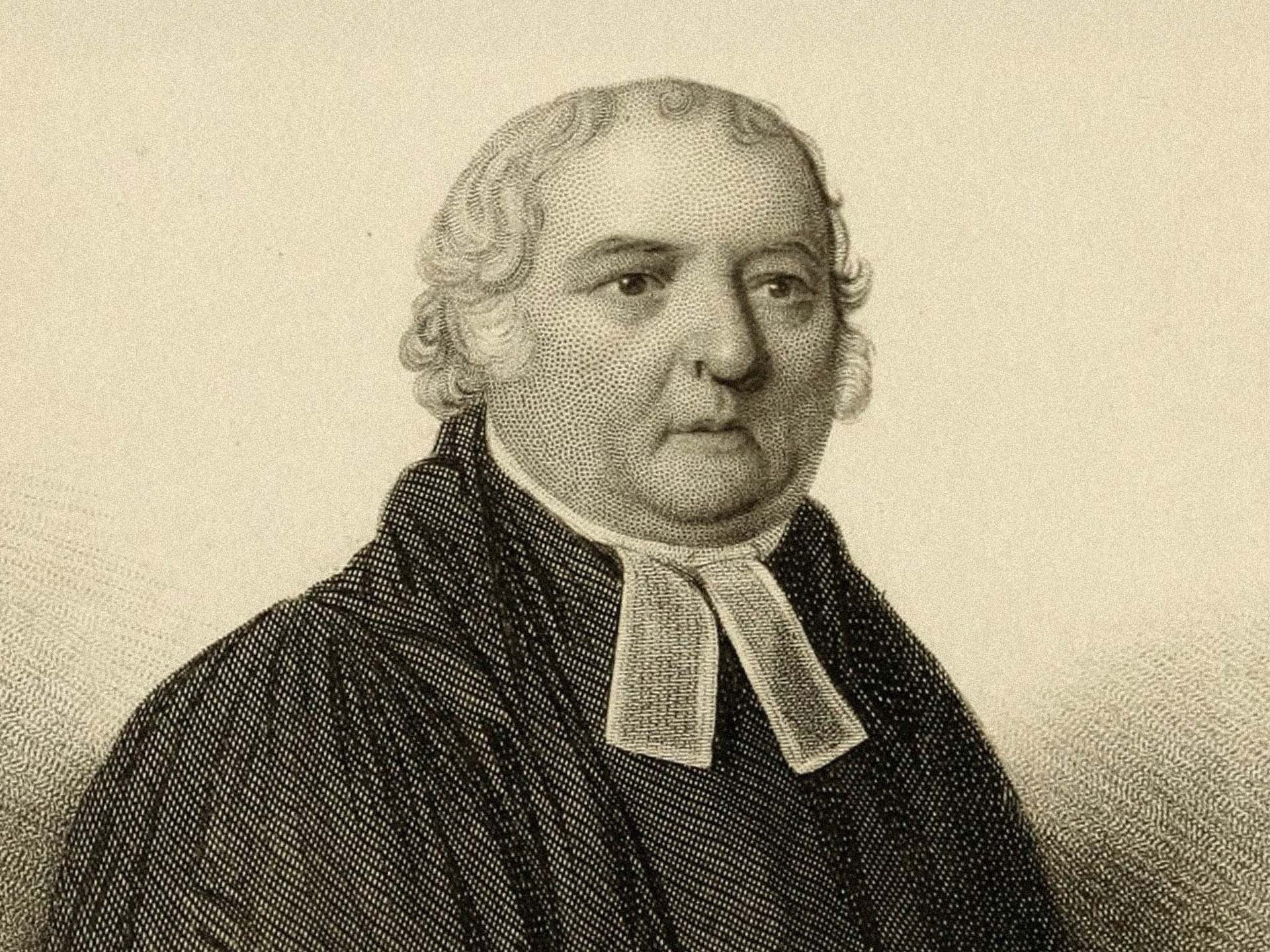
Samuel Marsden was born on July 25, 1765, in Farsley, a small village near Leeds in Yorkshire, England. He grew up in humble circumstances as the son of a blacksmith. His early years were marked by hard work with his father and a practical education, but they also showed signs of spiritual fervor. While apprenticed to his father, Marsden came under the influence of the Evangelical Revival that had spread through England under the leadership of John Wesley (the Methodist movement) and George Whitefield. The movement’s emphasis on personal conversion, holiness, and social reform would leave a deep imprint on him, and it would set him up for a long service of missions to the Māori people of New Zealand. But that would come much later.
Education and Work in the Colony of Sydney
The Elland Society—a group of evangelical clergy who sponsored promising (but ill-prepared) young men for ministry—noticed Marsden’s potential and sent him to Magdalene College, Cambridge, beginning in 1789. While at Cambridge, Marsden was exposed both to classical learning and a sense of calling to serve Christ among the poor, the unchurched, and convicts in prison. In 1793, he was ordained as a priest in the Church of England and then appointed assistant chaplain to the colony of New South Wales in Australia. He would bring with him a passion for ministry and for farming, especially sheep farming and the production of wool.
Marsden arrived in the penal colony of Sydney in 1794, with his new wife, Elizabeth, and his newborn daughter, Ann. But the world he entered was rife with moral chaos. The settlement was a harsh frontier populated largely by convicts (to whom Marsden would minister), soldiers, and settlers trying to survive under difficult conditions. The spiritual and social situation was bracing, and his duties as chaplain were demanding and often discouraging: preaching to convicts, visiting prisoners, and seeking to bring order and peace to a place riddled with cruelty and exploitation. The colony was also a place that continued to struggle with regulating arms, an issue Marsden sought to address, albeit with little success.
Marsden’s early years in the colony revealed his grit and diversity. On the one hand, he became known as the “flogging parson,” a nickname based on his strict enforcement of discipline as a magistrate. On the other hand, he was tireless in his pastoral and missionary vision. Despite how much time he needed to spend farming and raising his livestock, he labored to plant Christian faith in colonial soil. It would take some time for that to germinate and grow.
The Māori People
However, Marsden’s vision extended beyond the colony. He was moved by the situation of the Māori people of New Zealand, whom he first encountered through visiting whalers and traders. (Marsden later had to take up whaling temporarily to aid the missions movement.) Drawn by their intelligence and openness, he yearned to see a Christian mission that could bring education, peace, and the gospel to the islands, despite their warring tribes. To do that, he worked closely with the newly formed Church Missionary Society (CMS) in London, trying to convince them that New Zealand was a field worthy of investment.
In 1809, Marsden welcomed several Māori visitors to his home at Parramatta, forging relationships that would later make it possible for missions to their homeland to begin. He learned their language and customs, growing in his empathy and respect for the Māori. Given the time he invested to learn the language and customs, Marsden stood in contrast to many colonial attitudes of his time, which sought to assimilate people groups to European language and culture.
In 1814, after years of preparation, Marsden sailed for New Zealand aboard “The Active” with a small group of missionaries. On Christmas Day of that year, his longing for missions to the Māori was fulfilled: he preached the first recorded Christian sermon on New Zealand soil at Hohi Bay (a sermon on Luke 2:10). It marked the official beginning of the Christian mission in New Zealand.
Marsden’s Approach to Missions
How did Marsden approach missions? Being the son of a blacksmith and an ardent farmer, Marsden was practical, devoted, and business savvy. Using a vast amount of acreage he had acquired over the years, and drawing on his business experience, he established agricultural training and trade instruction paired with his evangelism. He believed that gospel ministry should uplift both souls and the societies of which they are a part. He saw education and honest labor as a way of establishing dignity and self-reliance for indigenous communities. This was something of which Marsden had first-hand experience. His was a faith that spoke to the heart but never let the hands sit idle.
In the years that followed, Marsden made many voyages between Australia and New Zealand, strengthening the mission and attempting to bring peace among rival Māori tribes. His affection for the Māori people endured throughout his life. “I am always happy when I am among them,” he once wrote.
Marsden’s contribution to Christian missions lies in his rare vision for cross-cultural ministry, especially at a time when cross-cultural work was unpopular and challenging. He was among the first English missionaries to approach indigenous peoples with respect for their culture. And his work with the Māori people opened doors for future generations of Christian missions work in the South Pacific. By the mid-nineteenth century, the Māori church had become one of the most vibrant in that part of the world, blending indigenous identity with biblical faith.
Samuel Marsden died on May 12, 1838, in Windsor, New South Wales. His body was buried near his beloved parish at Parramatta. On his tombstone are the words, “When he was reviled, he reviled not again.” It is a fitting tribute to a man who poured out his life for the spread of the gospel amidst a hostile frontier culture and warring Māori tribes. His life and work embody the rugged faith of a missionary pioneer who embraced the heritage and language of a foreign people.