Early Life in Africa
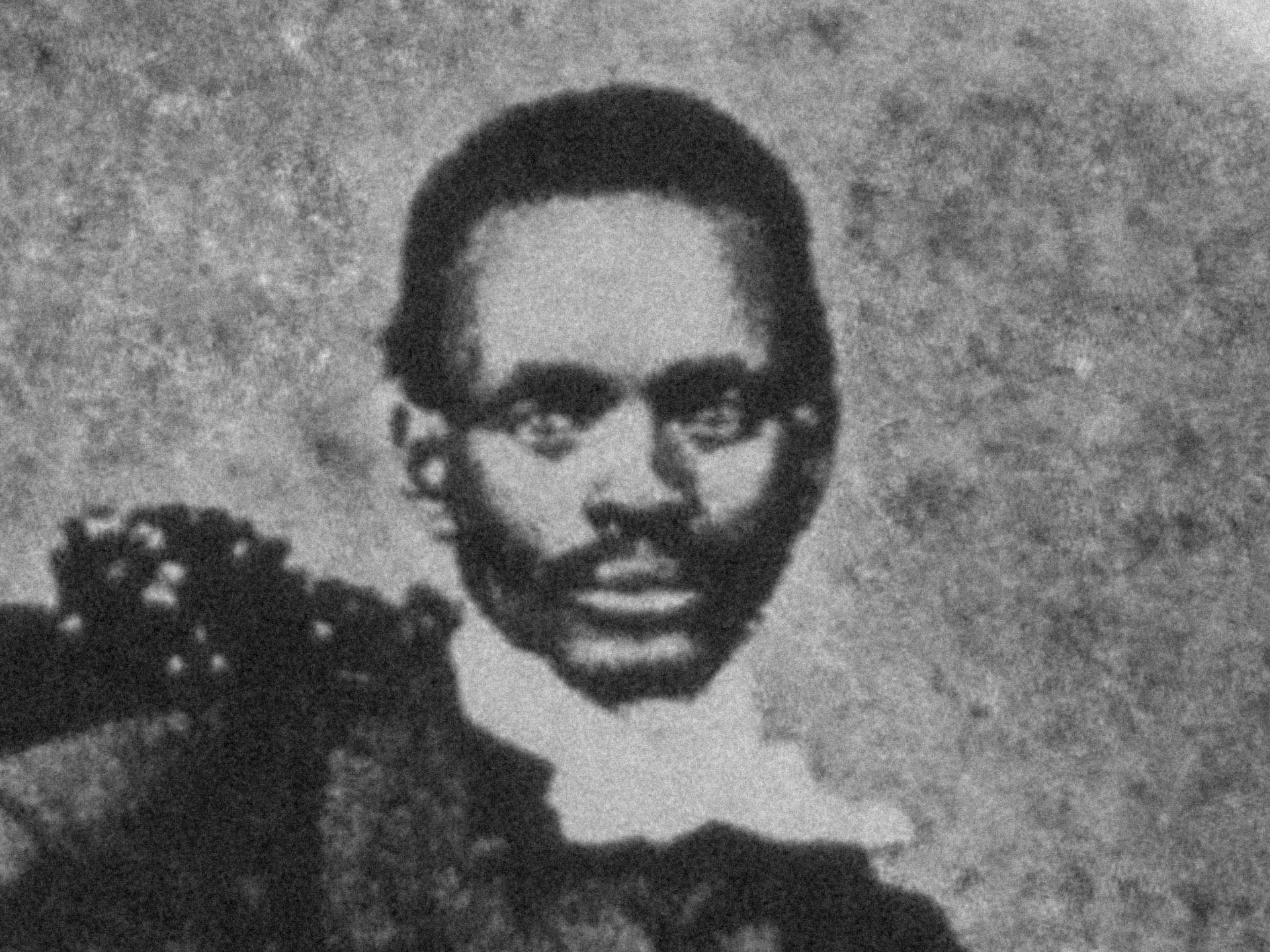
Tiyo Soga was born in 1829, in the Eastern Cape of South Africa. Nosutu, his mother, became a Christian, and selflessly asked to be released from her marriage so Soga could be raised Christian. She did not want Soga to be a part of pagan practices, even refusing to have him participate in the traditional African passage into manhood. This gave Soga grief later by discrimination from his own people. However, his mother’s decision to bring her son up as a Christian sent him on a remarkable path. Soga ended up becoming, as David Calhoun notes, the first Black South African to be educated overseas, the first Black South African to be ordained overseas, and the subject of the first biography of a Black South African.
Nosutu took her son to the Chumie mission where he studied. Soon, they learned of a free scholarship to the Lovedale Mission, founded by Scottish missionaries, only eight miles away. As an advanced school, it held a competition, where the African with the highest marks would be admitted for free. Calhoun shares that Soga and another boy were tied for the scholarship. A missionary asked them, “What is the greatest work of God?” The other boy answered, “The work of creation.” Soga replied, “The salvation of mankind, because it shows God’s love.” Naturally, Soga won. His early perception for spiritual matters and his heart for God was clear.
Scotland and Ministry
In 1846, the “War of the Axe” between the Africans and English threatened the Lovedale school’s safety. Soga and Nosutu were forced to flee after the school closed. The principal decided to return to Scotland and pay for Soga to join him. It was a fantastic opportunity, but of course, difficult to part from his mother. Nosutu said, “My son belongs to God; wherever he goes God is with him … he is as much in God’s care in Scotland as he is here with me.” Her faith carried Soga over uncharted waters to a strange land.
John Street United Presbyterian Church “adopted” Soga while he attended the Normal School in Glasgow. He was baptized in May 1848. The people at the John Street church continued to support him and pray for him.
In 1849, he went back to Africa where he helped to establish a new mission. However, unrest and danger followed him. The mission was burnt to the ground, almost taking Soga’s life. He returned to Scotland to continue his theological training. He attended the Theological Hall of the United Presbyterian Church in Edinburgh as the university’s first Black South African student. On December 20, 1856 he was ordained in the United Presbyterian Church.
While in Scotland, Soga met his wife, a Scottish woman named Janet Burnside. They married on February 27, 1857. Janet was known to be thrifty, strong, and resilient, especially when dealing with racial prejudice. Soga was often accused of trying to become a Black Englishman and received strange looks from both English and Africans for a white lady leaning on his arm. They had seven children together, all having exceptional lives. Their sons, William and John, were ordained as ministers. Their son, Kirkland, became a politician—the first Black lawyer in South Africa. Their fourth son, Jotello, became the first black veterinarian surgeon in South Africa. Two of their daughters, Isabella and Francis, became missionary school teachers. Their third daughter, Jessie, became a classic contralto soloist.
Back in Africa
Shortly after their wedding in 1857, the Sogas returned to South Africa. The region was steeped in immense starvation and unrest. Soga, who wrote over 30 hymns in his short life, composed one of his most famous: “Fulfill Your Promise” (Lizalis' idinga lakho). The last two stanzas reveal Soga’s compassionate heart for his people and his desire for their salvation: “Look at our world, / Forgive our sins; / Do not send your wrath, / To kill the children. / Prohibit us God from disobeying / The teachings of your Word; / Revive us, / We can hear your Truth.”
After arriving back in his homeland with his new wife, he worked with his dear friend, Robert Johnston, to establish the Emgwali Mission among his own people. A few years later, on June 15, 1862, a new church building opened. The church still operates today with a plaque on the wall describing Soga as “a friend of God, a lover of His Son, inspired by His Spirit, a disciple of His holy Word.” How his mother must have wondered at God’s providence and how He had used her decision to raise her son as a Christian. Now, he had returned to where they had left many years before to preach the Gospel of Christ. They would be at this mission for 11 years.
Writing and Legacy
Soga traveled extensively, often risking his health. During 1866, he fell sick long enough to translate Pilgrim’s Progress into the Xhosa language, adapting it to fit their experience. This work was the most important literary influence in 19th century South Africa after the Bible. Pilgrim’s Progress was precious to him, and naturally, he wanted his countrymen to see the same beauty in it as he did.
Soga also worked on the board that would translate and publish the Xhosa Bible. Embedded in two cultures, he was passionate about the preservation of the African culture and encouraged other European missionaries to write down the natives’ history. He published African fables, proverbs, legends, and a description of the Xhosa customs in the Indaba (“the News”), a monthly magazine by the Glasgow Missionary Society.
Sadly, his work took a toll on him. On June 4, 1868, he left his home in Mgwali to establish a new mission. After a difficult journey, he contracted tuberculosis. Cared for by his mother and his wife, he still grew weaker until he died on August 12, 1868. He was only 42. His life was relatively short, but full of the goodness of God. Rev. Chalmers described him as “brimful of the milk of human kindness, ready at all times to sacrifice his own interests for the benefit of others of whatever colour.”
Soga was a figure who defied the odds of a turbulent age. He was able to see both ways of life, all colors of people, from a unique viewpoint. G.A. Duncan understands him as a paradox: “…neither black not white, neither African nor European, neither a slave nor a master, neither arrogant nor humble, neither British nationalist nor African nationalist, neither an admirer of the British way of life nor a despiser of his own African culture. He stood at a time and place where two cultures collided– the African and the European.” Soga reminds us, in a similar turbulent culture, to be rooted in the Kingdom of God, and not in earthly realms. Soga was a change maker wherever he was, leaving a lasting imprint in a short time.