Missions in Hawaii
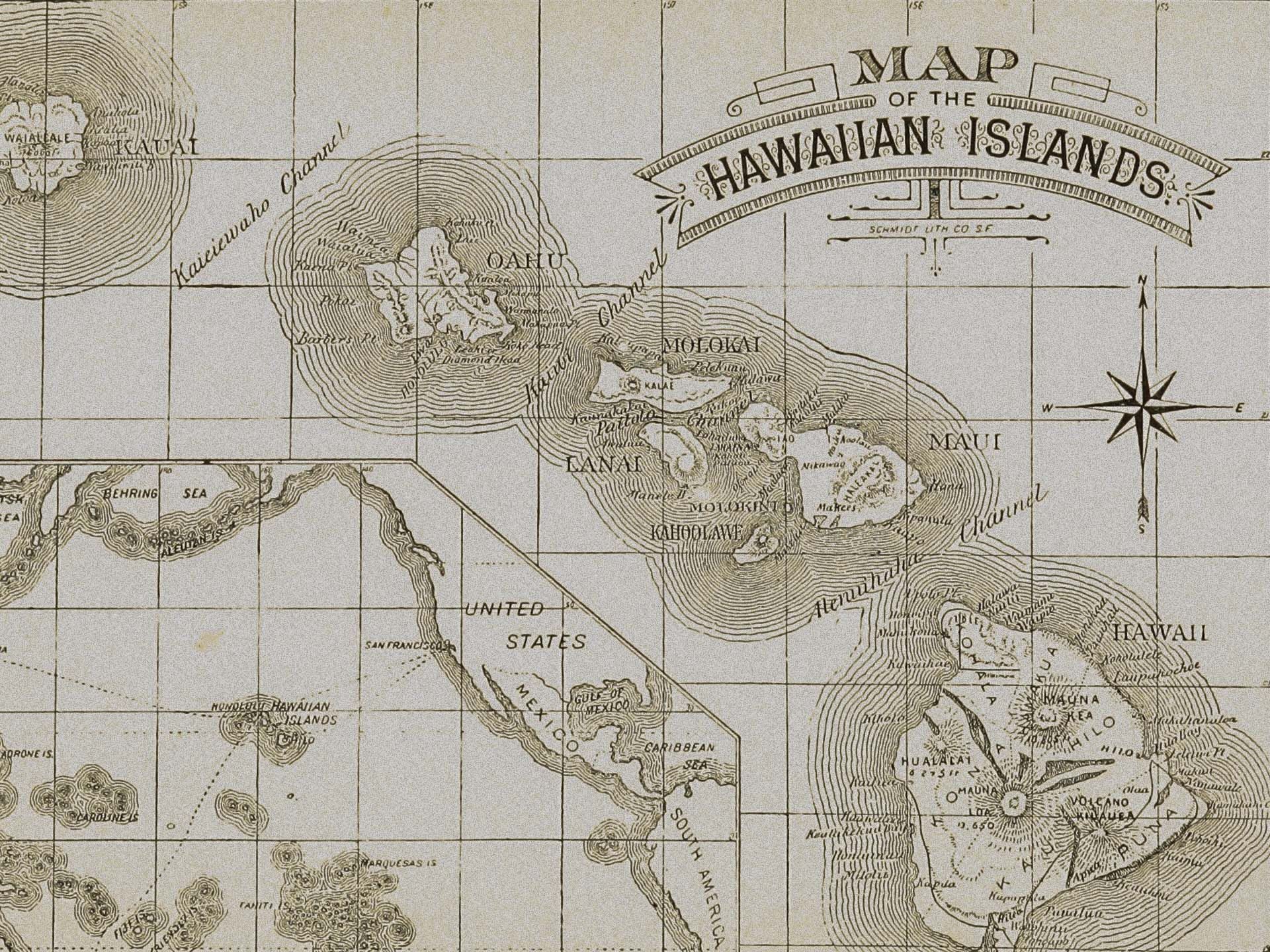
William Alexander (1805-1884) was born in Kentucky and attended seminary, including Centre College and Princeton. He and his wife sailed to Hawaii in 1831, shortly after their marriage, to be missionaries to the natives. At the time, Hawaii was not yet an American state, or even an American territory. William Alexander and his wife worked there as missionaries until their deaths. Many of their children remained in Hawaii for their whole lives, working there, and strengthening the established churches.
In 1888, four years after William Alexander’s death, his son put together a memoir, collecting old diary entries. The memoir went through Alexander’s life, focusing especially on his missions work in Hawaii. We have selected parts from that memoir that demonstrate Alexander’s call to missions and his obedience to that call. His reflections are helpful in seeing the internal struggle that often comes with the call, and then his subsequent obedience.
Theological Education And Missionary Consecration
The theological class which Mr. Alexander had joined was broken up in the latter part of July, 1828, by the death of Mr. MacFarland. Mr. Alexander was now kindly assisted by his brother Thomas to take a course in Princeton Seminary.
"I set out for Princeton," he says, "the 6th of October, 1828, accompanied by Brethren McRoberts and Lilly, and Mrs. MacFarland. I reached Princeton the 1st of November, and blessed God for bringing me hither. Even within these consecrated walls I found a proneness to forget God, a proneness to let social prayer suffice for secret, especially as I found it difficult to be alone with God. With Brother McRoberts, my dear chum, feeling the need of being at times alone with God, I made arrangements, by which we have an opportunity for secret prayer three times a day. Since then I have reason to bless God. I have had more longings for holiness than heretofore.
"About this time my attention was turned particularly to the perishing condition of the heathen; and I have since endeavored to inquire of the Lord whether I might carry the gospel to some of them. I feel on the whole more desirous to go than to remain in the United States. It was my choice to go to Palestine; accordingly I commenced the study of Syriac."
…A voluminous diary follows of his religious experience day by day through this period of his life, from which his thoughts in regard to undertaking the foreign mission enterprise are here quoted:—
"Read a short history of the South Sea islanders, and cannot but be amazed at the transforming power of the gospel. That I may be permitted to carry it to some dark corner of the earth is my daily prayer. . . . This evening I took a dismission from the 'South and West Society,' believing that, with my present views, I cannot conscientiously remain a member. For if the Lord will not shut up my way, I feel bound in spirit to carry the gospel to some of the millions in pagan darkness. O Father, be my guide. . . .
"April 6, 1829.—For several days past I have frequently inquired of the Lord whether I shall give my name to the American Board of Foreign Missions. I still hesitate in determining what is duty. O Lord, direct my steps, and help me to glorify thy name. . .
"April 8, 1829.—This evening in conversation with Mr. Evarts, Secretary of the American Board, I felt aroused on the subject of missions, and inclined to hope that I would be allowed to serve God on heathen ground. O Father, direct me, as though a voice behind me were saying, 'This is the way, walk ye in it.' . . .
"April 9.—I bless the Lord, for he has been precious to my soul to-day; and a consideration of his presence and love has kept me in a melting mood. I had another interview with Mr. Evarts to-day, told him all my feelings on the subject of missions, and promised to write to him soon. I trust the Lord will grant me the grace to preach the gospel among the heathen. O God, I am thine; guide me in the path of duty. . . .
"June 11, 1829.—This morning I received a most affectionate letter from my dear sister Ann. Oh, she is dear to my heart, and in the most tender way she weaves those ties which bind me to my native land; but I hope the ties which bind me to my blessed Saviour are stronger; and if he will bid me, and give me strength, I will sunder all filial and fraternal bonds, and go to the ends of the earth. O Lord, thou art my portion be thou my guide. . . .
"November 11, 1830.—A letter has come to hand from Jeremiah Evarts, informing me that I am appointed a missionary of the American Board. It produces very solemn reflections. Now unless God prevent by his providence, I am going to the heathen to spend my life in telling them of Jesus (a thing for which I have often prayed). It will be a trial to leave my friends and country; but 'if any man love father or mother more than me, he is not worthy of me.' I do love them, but I feel in my heart I can gladly bid them farewell. I may meet with sore trials on pagan ground; the rude barbarian may imbrue his hands in my blood; but no sufferings of this life are worthy to be compared with the glory which is to be revealed. Furthermore, they get near the throne in glory 'who come out of great tribulation,' and 'their robes are washed and made white in the blood of the Lamb.' It is a privilege, it is an honor, to suffer for Christ; and I now feel as if I could count it all joy, to be found worthy to suffer for his sake. The sore trial after all lies deeper than this; it lies in myself. Oh, it is this load of sin, which I bear about me; I am so prone to wander from God. . . . I trust in him, and seek him with my whole heart, and realize his blessing. . . .
"April 4, 1831.—Yesterday I was down at Millstone. Three of my Sabbath-school teachers are anxiously inquiring the way to Jesus. I trust the Holy Spirit has commenced a good work in their souls. Conversed awhile with a colored scholar. . . . I proceeded to explain to her how Jesus Christ came into the world, and suffered and died in the place of sinners. This was a doctrine entirely new to her. She wept profusely as I explained it to her. . . . I felt as though I were explaining the way of salvation to a poor heathen. I hope it will prove life to her soul. . . .
"August 2, 1831.—To-day I have been examined by the Presbytery of New Brunswick on theology, church history, church government, the sacraments, and Hebrew, and have been licensed to preach the gospel of Christ. High and holy calling! An angel might seek it, and an angel might tremble in view of its responsibilities! How unworthy and unfit am I for the work! Much heavenly wisdom is needed. Oh, grant it, Lord, that thy Son may be glorified and sinners rescued from perdition. But how little do I know of the love of Christ! How poorly qualified am I to direct souls unto him! I will look to him for grace and strength, and, using all diligence, will trust in him, that he will keep me from disgracing the holy office. Gracious Redeemer, I would now covenant anew to be thine. Oh, make me wise to win souls to thee; and if thou dost grant me the grace to preach among the heathen thine unsearchable riches, oh, may I be faithful unto death. Oh, guide my feet, uphold my goings, and deliver me from sin. Grant me the anointing of the Holy Spirit for thy mercy's sake. Amen.
"August 7, 1831.—Yesterday I received a letter from Rev. R. Anderson, informing me that Brother Armstrong and myself are designated for the mission in the Pacific. To this field my heart inclined me, and I trust it has been of the Holy Spirit. I rejoice in the prospect of starting to the field next November. I rejoice that I may so soon have the high privilege of telling poor dying heathen of Jesus Christ. I rejoice in having my dear Brother Armstrong for my companion. Bless the Lord, O my soul, for he has dealt bountifully with thee. I would have been glad to have enjoyed the company of Brethren Forbes, Thomson, and Boggs. Perhaps Forbes may yet go with us. The Lord direct, and to his will I wish to say from the heart, Amen. . . .
"I was ordained by the Presbytery of Cincinnati, October 12, 1831, at the same time with Rev. W. O. Thomson" (who wrote "The Land and the Book").
The following accounts of the action of that Presbytery are found among his papers.
…
"This is to certify, that the bearer, the Rev. Wm. P. Alexander, who is appointed by the American Board of Commissioners for Foreign Missions, a missionary to the Sandwich Islands, is a member of the Presbytery of Cincinnati in good standing; and being about to set out for his field of labor, he is hereby affectionately recommended to the Christian sympathies and fellowship of his missionary brethren, or any other people of God, among whom he may travel or sojourn. Certified at Cincinnati in the State of Ohio, on the 13th day of October, A. D. 1831, and signed on behalf, and by order of, said Presbytery. By John Thomson, Stated Clerk of the Presbytery of Cincinnati."
….
Arrival At The Hawaiian Islands
"HONOLULU, Friday, May 18, 1832.—Yesterday morning at day-break I found the island, Oahu, but a few miles distant. With a favorable wind, we rounded Diamond Head, and cast anchor in the outer harbor, before eight o'clock A. M. 'The town looked like a city of hay-stacks; only grass houses were to be seen; I believe there were one or two frame houses.' Soon we were surrounded by natives in their canoes, bringing milk and eggs for sale, some of them altogether naked, except the malo. The scenes of Rio de Janeiro had prepared me in some measure for such a spectacle; still the appearance of the natives was shocking; at the first sight the ladies shrunk away, and hastened to the cabin.
"Very soon we received a hearty welcome from Brethren Clark, Dibble, Green, Ruggles, and Whitney. They brought us some of the best water-melons I have ever tasted. At ten o'clock we came ashore. The wharf was covered with thousands of natives, whom curiosity and affection had brought to see us. Some of the ladies, who were ill, were conveyed to the house of Mr. Chamberlain, on a cart drawn by natives. Mrs. Emerson has related that 'the old mission wagon was in waiting at the beach, and Mrs. Armstrong and I entered it. We were drawn by a team of native men, pulling and pushing. This method of riding seemed so comical that I could not suppress a laugh, but looking about and seeing the grave faces of Messrs. Bingham and Whitney, I perceived that they saw nothing unusual, and concluded it was time to put on my customary sober face.' Those of us who walked were followed by crowds anxiously pressing before each other, to give us the customary salutation, 'Aloha.'
"All of us having assembled at the house of Mr. Chamberlain, together with all the old missionary brethren and sisters who were at this station, for the annual general meeting, Mr. Bingham read the general letter from the Board to the mission, after which we united in singing the hymn beginning, 'Kindred and friends, for Christ's dear sake a hearty welcome you receive,' when we knelt together and Mr. Bingham led in offering thanksgiving and praise for our preservation during the voyage and safe arrival here. It was a truly affecting interview, a company composed of old soldiers who have borne the burden and heat of the day, and nineteen others who are just buckling on the armor.
"Immediately after the meeting, we were distributed among the various mission families who reside here. Mary A. and myself were comfortably lodged in an airy, commodious upper room of Mr. Chamberlain's house.
"Saturday, May 19.—We were introduced to the young king to-day (not yet king, for there was a regent). He received us very politely, welcomed us to the Hawaiian shores, acknowledged the great good the nation had received from missionary labors, and expressed great pleasure at the increase of their numbers. A short address made to him in the name of the newly-arrived missionaries was interpreted to him by Brother Bingham." "Then accompanied by the king and his chiefs we walked to the house of Kaahumanu, the queen regent of the islands, formerly a favorite wife of Kamehameha I. She was occupying a large grass house partitioned into two rooms by a calico curtain. She sat in a large wooden arm-chair, attended by two maids of honor wielding kahilis. She was dressed in an unbleached cotton gown, and wore a wreath of pandanus fruit around her neck." (Mrs. Armstrong's sketches.) "She received us with tears of joy. She was very ill and unable to speak much; we therefore soon withdrew.
…
"Sabbath, May 20.—At half past nine A. M. attended native service; more than four thousand hearers. Mr. Bingham preached. The services were held in an immense thatched house. There was a box-like pulpit perched upon one side in the middle of the house, and a few rude benches on which the teachers and chiefs sat; nearly all the congregation sat upon the floor, which had been strewed with rushes for the purpose. At eleven A. M. I preached in English.
"June 5.—At four o'clock this morning Kaahumanu, the queen regent, died in the Valley of Manca, whither she had been carried a few days before with the hope that the coolness of the situation would benefit her health. In her the natives have lost a chief magistrate in whom they justly confided, and whom they ardently loved. The mission has lost a mother, a judicious counselor, and a firm, unshaken supporter; but Heaven has received a soul cleansed by the blood of Christ from the foulest stains of heathenism, infanticide, and abominable pollution. She was the first native convert on the island of Oahu."