How Will the World Hear?
Thousands of language groups remain in darkness. Millions will die, never hearing of Christ. Corners of the earth have yet to be reached with the message of the gospel. For the all-powerful, all-wise God, why is this so? How is it that the whole earth has not heard the message of Christ? If God could accomplish this in a single moment, then why would He not?
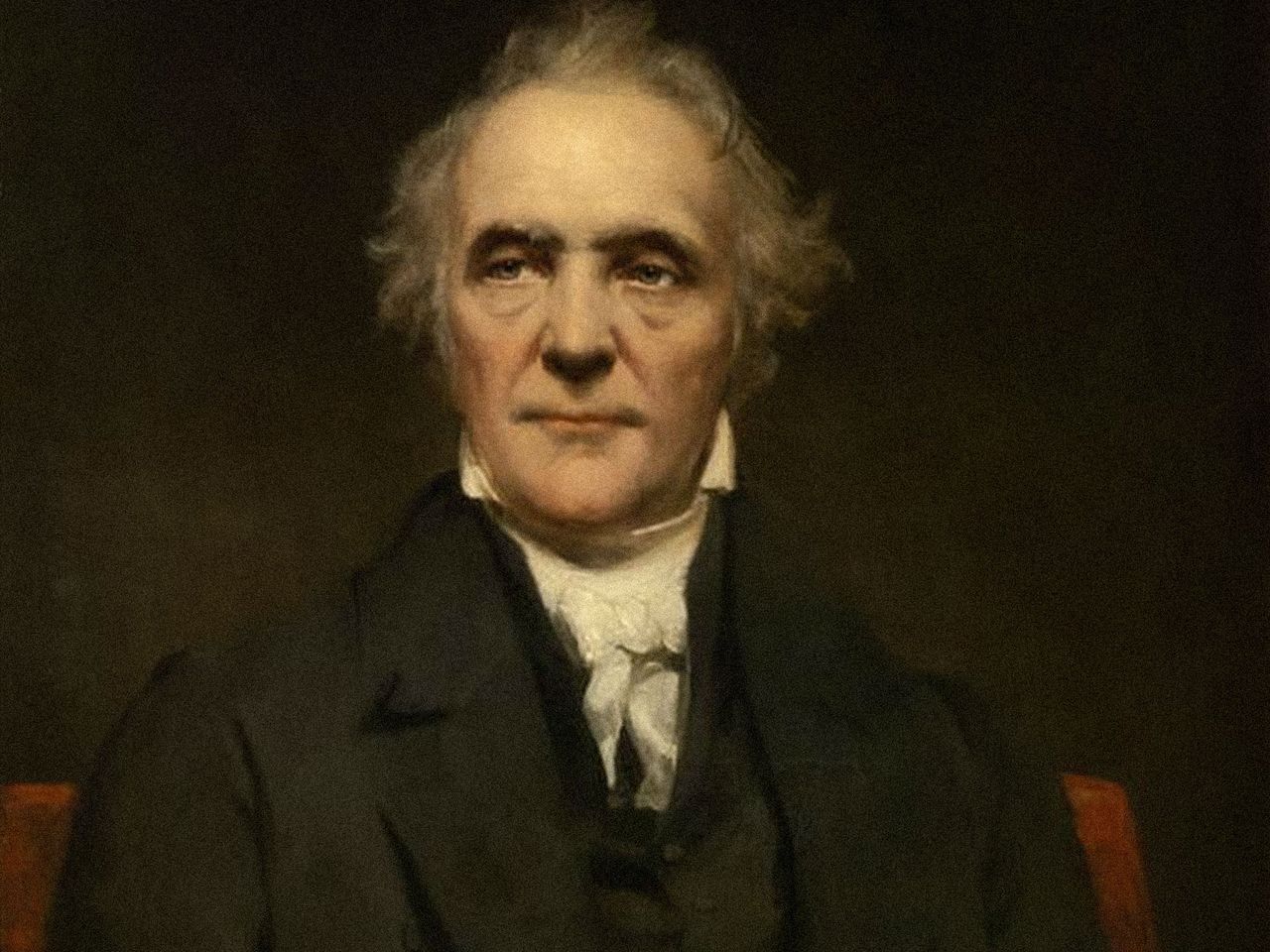
Thomas Chalmers provides the startling answer to these questions—the instrumentality of man. He challenges both men of prayer and men of performance to take up the responsibility to be committed to prayer and the ministry of the Word. This is the divine plan for the evangelization of the world. To make this claim, Chalmers exposits Romans 10:14–15 as part of his lectures on the book of Romans, sermons originally delivered in the parish of St. John’s in Glasgow (1819–1823) and completed for publication in 1842.
“How then shall they call on him in whom they have believed? and how shall they believe in him of whom they have not heard? and how shall they hear without a preacher? and how shall they preach except they be sent? as it is written, ‘How beautiful are the feet of them that preach the gospel of peace, and bring glad tidings of good things!’” Romans 10:14–15
These verses give the first answer, the answer which is readiest and most within reach, to the question—How is it that the whole earth is not Christianized? God could, by an exercise of power and unlimited sovereignty, achieve this result at the instant bidding of His voice—even as on the first day of creation, He said let there be light, and there was light. But God has, in the exercise of wisdom, to us perhaps inscrutable, yet in perfect analogy with the many thousand processes of nature and providence, he has chosen to ordain an instrumentality for the diffusion of the Christian religion over the world. Now it so happens that men are component, nay the chief parts of this instrumentality; and we should first enquire how they have done their part—so as to ascertain whether it be not we the men who are in the fault, before daring to lay the fault upon God.
It is a sound doctrinal theology which acknowledges, amid the countless diversity of operations around us, that it is God who works all in all. But God works by means; and when a certain prescribed human agency enters into that system of means which He has instituted, it is a sound practical theology to labor and assiduously in the bidden way, as if man worked all. It is one of the highest points of Christian wisdom, to combine the utmost dependence on God with the utmost diligence in the prosecution of all those activities which He Himself has appointed—insomuch that though the Holy Spirit be the undoubted agent of every conversion, Paul held it no infringement on orthodoxy, to say as much as that, under our present economy, the conversion of the world, without the instrumentality of men, is impossible. “How shall they believe, unless they hear? How shall they hear without a preacher? How shall they preach unless they be sent?” He himself was converted, by a direct communication from heaven, apart from all converse with flesh and blood, receiving the gospel not of man nor taught it by man, but by the revelation of Jesus Christ—yet none more strenuous than he, in affirming the necessity of human co-operation, in the great work of evangelizing the world. Not but that he imagined, in every instance as well as in his own, that faith is not of ourselves but is the gift of God; and that even when conveyed by the preaching of one man into the mind of another, it is but the pouring from one earthen vessel to another of a treasure which had come down from heaven—so that whenever, in any age or country of the world that precious faith which is unto salvation is deposited in any heart, it is established by a supernatural agency, and stands there not in the wisdom of men but in the power of God. It is for Him however, and not for us, to make choice of His own pathway for the conveyance of His own blessings, and the propagation of His own spiritual influences into the souls of men; and if He choose to make one man His vehicle for the transference of light and grace into the heart of another, it is the part of him whom He has thus selected as His instrument, to labor with all his might and assiduity in the sacred duties of the vocation whereto he has been called. This preference for the agency of men in the work of Christianization is conspicuous in every age of the church; and at no time more than in the first age, even though it was the period of miracles and supernatural visitations. We have often looked on the history of conversion of Cornelius as a striking illustration of this. God could have worked a saving faith in the heart of Cornelius, not however that He might preach the gospel to him, but that He might bid him send for Peter, and receive that gospel at the lips of a fellow-mortal and God also sent to Peter a communication from heaven to prepare him for the message—thus doubling as it were the amount of miraculous agency, in order that the gospel might be heard by a yet unconverted child of Adam, not through the medium of a supernatural and angelic, but through the medium of a natural and a human utterance. Yet not so as that the natural should supersede or displace the supernatural—for while Peter spoke, the Holy Ghost fell on all them who heard. The function of Peter was the same with that of a minister or missionary in the present day—it was to tell Cornelius the words by which he and all his house should be saved. And the function of the Holy Ghost for the purpose of giving demonstration and efficiency to the word, is the same now as ever—He falls on us still even as He did on them at the beginning. Let no man put asunder the things which God has joined; but let all in deed and in performance strive mightily for the spread and prevalence of the gospel on the earth, and give no rest to God in prayer, that by His grace He might work in them mightily.
The application of all this to the question of mission, whether home or foreign is quite obvious. Let these be multiplied to the uttermost, so as to fill up all the vacancies which are within, or to spread abroad over all the mighty spaces which are beyond the limits of Christendom. Yet all will be useless and effete, if unblest or unaccompanied by the Spirit of God. Some there are, men of devotion, like many perhaps of the Puritanic age, who have a contempt for machinery, and who think to succeed by prayer alone for the extension of our Redeemer’s Kingdom. Others there are, men of bustle and enterprise, like many perhaps of the present age, who live, if not in the contempt, at least in the neglect of supplication; and think to succeed in the work of Christian philanthropy, by the busy prosecution of those schemes and societies which have recently sprung up in the religious world. Neither will do singly—neither the human instrumentality alone without the agency from above; not yet the celestial agency, which refuses to come forth but through an earthly apparatus which itself prescribes, and to the working of which it gives all its vitality and all its vigour. Without the conjunction of these, both the men of prayer and the men of performance will fall short of the object which their hearts are set upon. He who knows rightly to divide, or rather rightly to compound the word of truth, knows how to conjoin these, and so gives himself wholly, not to prayer alone or to the ministry of the word alone—but like the apostles of old to prayer and the ministry of the word. The one sets up and works a machinery upon earth. The other brings down from heaven that inner element which actuates the movements, and imparts to them all their living energy. It is to this prolific union of devout and desirous hearts with busy hands, that the church of Christ stands indebted for all its prosperity, in those seasons of gracious revival, when the frequent and earnest preaching of the word has been preceded or accompanied by a spirit of frequent and importunate prayer. Thus alone can the word of God be caused mightily to grow and to prevail—be it in a household, or a parish, or an empire, or through the world at large.
“How beautiful are the feet of them that preach the gospel of peace and bring glad tidings of good things.” Nothing can exceed the admirable tact and sagacity, wherewith Paul adapts his argument to the tastes and partialities of those with whom he at the time is holding converse. In an upright and honorable sense he was all things to all men. To the Greeks he was a Greek—as in his address to the people of Athens, when he quoted from their own poets, and reasoned with them from the mythology of their nation. And to the Jews he was a Jew—as in in the passage before us, in which we can discern the same principle of accommodation—as indeed in all his recorded addresses to the men of that nation, when he never fails to quote abundantly from their own prophets, and to reason with them out of their own scriptures. And the quotation before us seems eminently fitted to subserve, what was evidently a great object with Paul, throughout the whole of this epistle—that of reconciling his countrymen to the admission of the Gentiles into a religious equality with themselves. It is taken from one of their own most illustrious writers, to whom they could not turn back, without reading in almost immediate contiguity with the passage of their own people and the redemption of Jerusalem “The Lord has made bare His holy arm in the eyes of all the nations (Gentiles); and in all the ends of the earth shall see the salvation of our God.” But how could they behold that salvation—or, to understand their seeing in the mental sense of the term, how could they believe in it, unless they were told of it, unless it was preached to them. Unless messengers were sent to them as well as to God’s peculiar and favored people! In other words, as the Gentiles were under the gospel economy to be made partakers of the same faith, and so of the same high privileges with themselves, and as they could not believe without hearing, nor hear without a preacher—it was necessary that the message of life should be propounded to them also; And thus he vindicates his own peculiar apostleship, in that he was commissioned as a chosen vessel before the Gentiles as well as the children of Israel.