The Three Freds
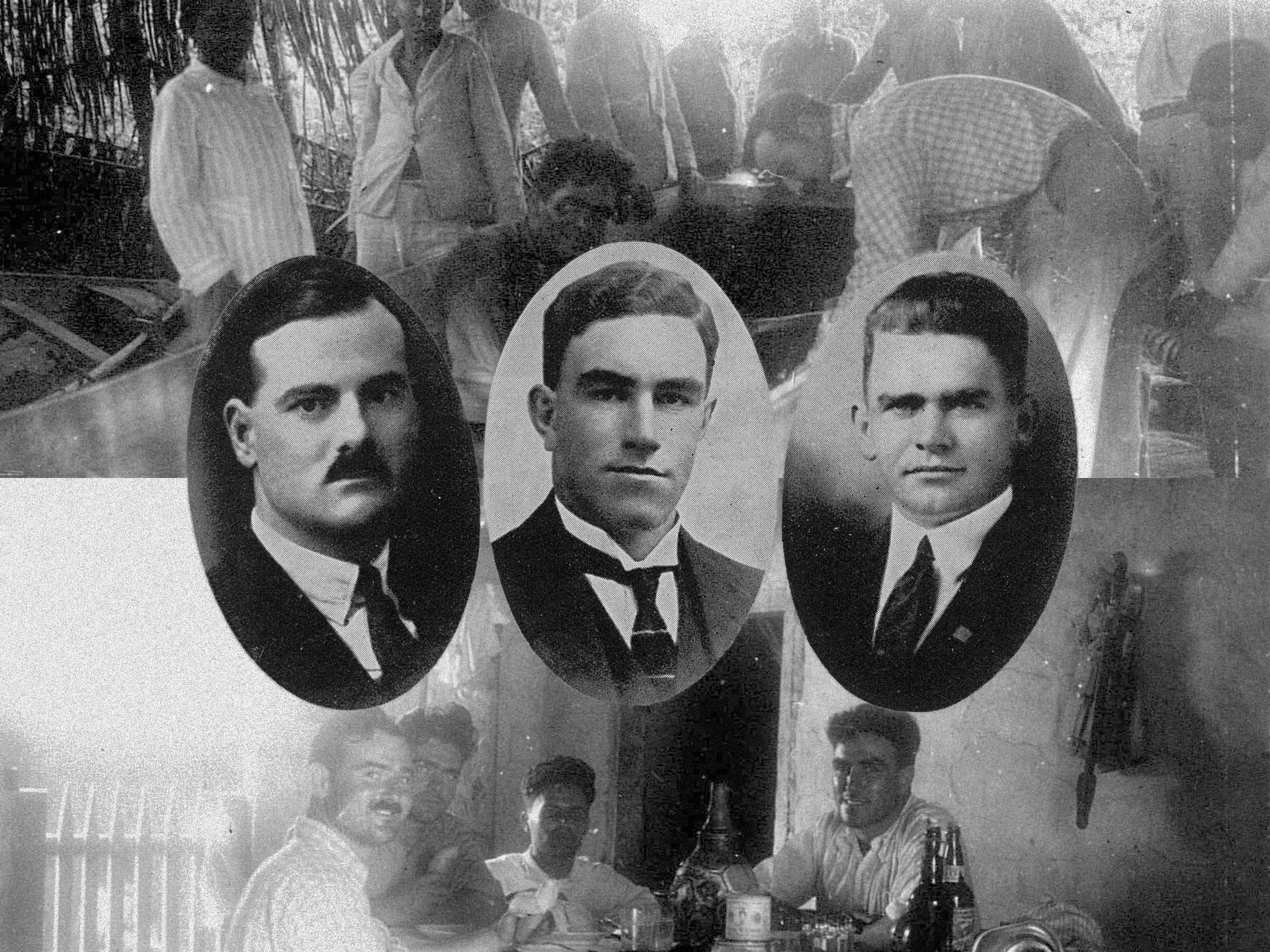
On April 7, 1936 Horace Banner and fellow Unevangelized Fields Mission (UFM) missionary, William Johnstone, launched an expedition up the Xingu River and its tributary, the Riozinho in Brazil. They were accompanied by several Brazilians well acquainted with the region. Their destination was Smoke Falls, a distant point far up the latter of the two rivers. Their objective was to locate three UFM missionaries—Fred Roberts, Fred Dawson, and Fred Wright. “The Three Freds” had launched their own expedition a year earlier to make contact with a dangerous indigenous group known as the Kayapos, known by other indigenous groups and Brazilians as the “big lips” because of their habit of piercing their lower lip and over time successively inserting larger and larger discs to denote social and political status. Their mission was to seek out the members of this group, befriend them, learn as much as possible their language and ways, and most significantly to share the gospel with them—a message they had never heard before.
In the year since their departure, nothing had been heard from the Freds.
After traversing rapids and portaging waterfalls, Banner and his group made it to their destination point. There, overwhelming evidence indicated that the Three Freds had been killed by the people they were seeking. Their bodies were never found.
.jpg)
Fred, Fred, and Fred
By the 1920s, Worldwide Evangelization Crusade (WEC) had established several mission works along the Amazon. By the early 1930s, a new organization, Unevangelised Fields Mission (UFM), had started as a breakaway from WEC. Some of WEC’s missionaries in Brazil joined with the new work. Among them was Fred Roberts, a native of Australia. He had been trained at Sydney Missionary and Bible College in the mid-1920s. By 1926, he had answered the missionary call and was in Brazil. Over the next several years, he labored among different indigenous groups including the Guajajaras, a work that had been pioneered by Fenton Hall. In 1928, Fred married Mabel Green, a newcomer to the field. However, after just six months of living in primitive conditions, Mabel died from the ravages of tropical diseases. She had been pregnant at the time. Mabel and her unborn child were buried next to Fenton Hall, the man who had inspired Fred Roberts to go to the Amazon, and who also had succumbed to disease after six months of living among the Guajajaras. Though grieving (expressing a desire to one day be buried next to his wife and child), Fred continued his work with the people he had come to share God’s word with.
One group in particular captured Fred’s attention, the Kayapos of the Upper Riozinho. The Kayapos, with a very large population base along the Upper Xingu and Riozinho, were roughly divided into two groups—those who were hostile to outsiders and those who were open to contact and some assimilation. Pioneering Brazilians in the region were deathly afraid of the former, and for good reason; attacks were frequent and butchery was constant. This behavior was experienced by both sides, however. From the beginning, rubber and nut hunters from the Brazilian population had brutalized the Kayapo population. Now both sides’ policy was to “shoot on sight.” Undaunted by danger, Fred was inspired by the earlier work of Ernest Wootton who had sought to reach the Kayapos. An intrepid missionary, Wootton had worked singularly to contact the group, enduring tremendous hardships. By the end of his missionary activity, he had made some contact and had created a lexicon of basic Kayapo vocabulary which would serve useful for others.
In April of 1935, Roberts was joined by two missionaries new to the field, Fred Dawson and Fred Wright. Together, the team began an exploratory expedition to reach the Kayapos beyond Smoke Falls. Dawson, a native of Tasmania, had been destined to be a farmer, but he too had been influenced by the work of Fenton Hall and answered the call to the Amazon. Fred Wright came from Belfast, Northern Ireland. He, like the others, was robust in health and strength and ready to serve to bring the gospel to the lost. One biographer quipped that he had an infectious Irish humor, noting that he would often say, “that when he was found wrong, he was always Wright!”
To Smoke Falls
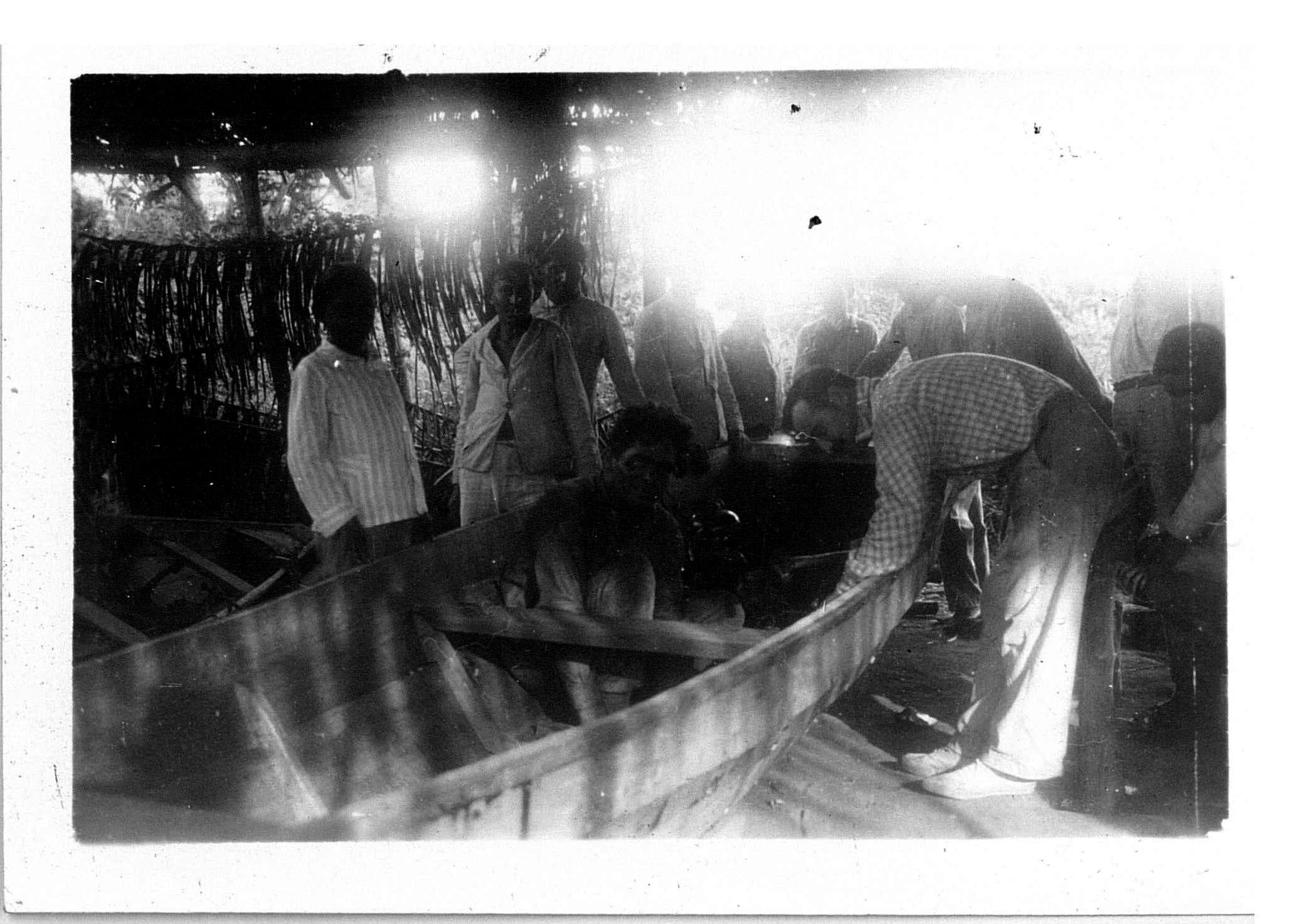
All three knew the risks they were taking, and they prepared well. The team acquired an outboard motor for a canoe they would have to fashion in order to proceed up the Riozinho. They brought supplies, guns for hunting, and even sheet metal to fashion into breastplate armor in case of attack. Traveling hundreds of miles up the Xingu, their last point of contact was at a village called Nova Olinda at the mouth of the Riozinho where it empties into the Rio Fresco, not far from the town of Sao Felix do Xingu. There, they started on their own to the land of the Kayapos. Before leaving, each wrote a letter home. They expressed that they should not expect to be heard from for probably six months. Each letter conveyed the sentiment that although they knew not what the future held, they were confident that the Lord would somehow bless their effort. An excerpt from Fred Wright’s letter stated:
As far as we can ascertain, the Kayapos are very numerous. We are quite aware that humanly speaking, we are as good as dead men, but brethren, stand by us as one man. Do not criticize. We are beyond criticism as we go forward in the Name of the Lord and under His command after having fully counted the cost. Finally, it is well to remember that Calvary was and is the greatest victory of all times. Death to the Christian is not defeat.
What Banner and the others ultimately discovered was that the three had reached their destination and had been murdered by the Kayapos at the base of Smoke Falls. Hope had been held that the three would be found alive, but the evidence told a different story. The canoe that the Three Freds had used was found submerged at the base of the falls. The motor was also found, damaged by clubs with one of the fins broken off. Clothes were found nearby, possibly stained with blood and ravaged by ants. The evidence was undeniable. Following a brief time at the falls the group made a hasty retreat back down the Riozinho to safety, feeling that at any moment they could be the next victims.
Love Your Enemies
Banner was not finished with the Kayapos, however. In subsequent trips up the Riozinho, he was able to make contact with members of the hostile group. Just why some of the hostile Kayapos were now interested in making contact with outsiders was a mystery. It was thought that either threats from other tribes or internal strife led to the change. Eventually it was revealed who the murderers were. In one visit, Banner made an acquaintance with one of them. This man, who was in desperate need, Banner helped to build a hut. This act of kindness, along with others, opened the door to the hearts of the Kayapos. Banner and others would be instrumental in bringing the gospel to a dangerous and hostile people. One cannot help but think of Matthew 5:44 and Christ’s command to “love your enemies.” What a difference it must have made in the hearts and minds of these Kayapos that here were people ready to show them the love of Christ through forgiveness of sins, as opposed to how they had been treated by others.