Why "The Lord Who Sends"?
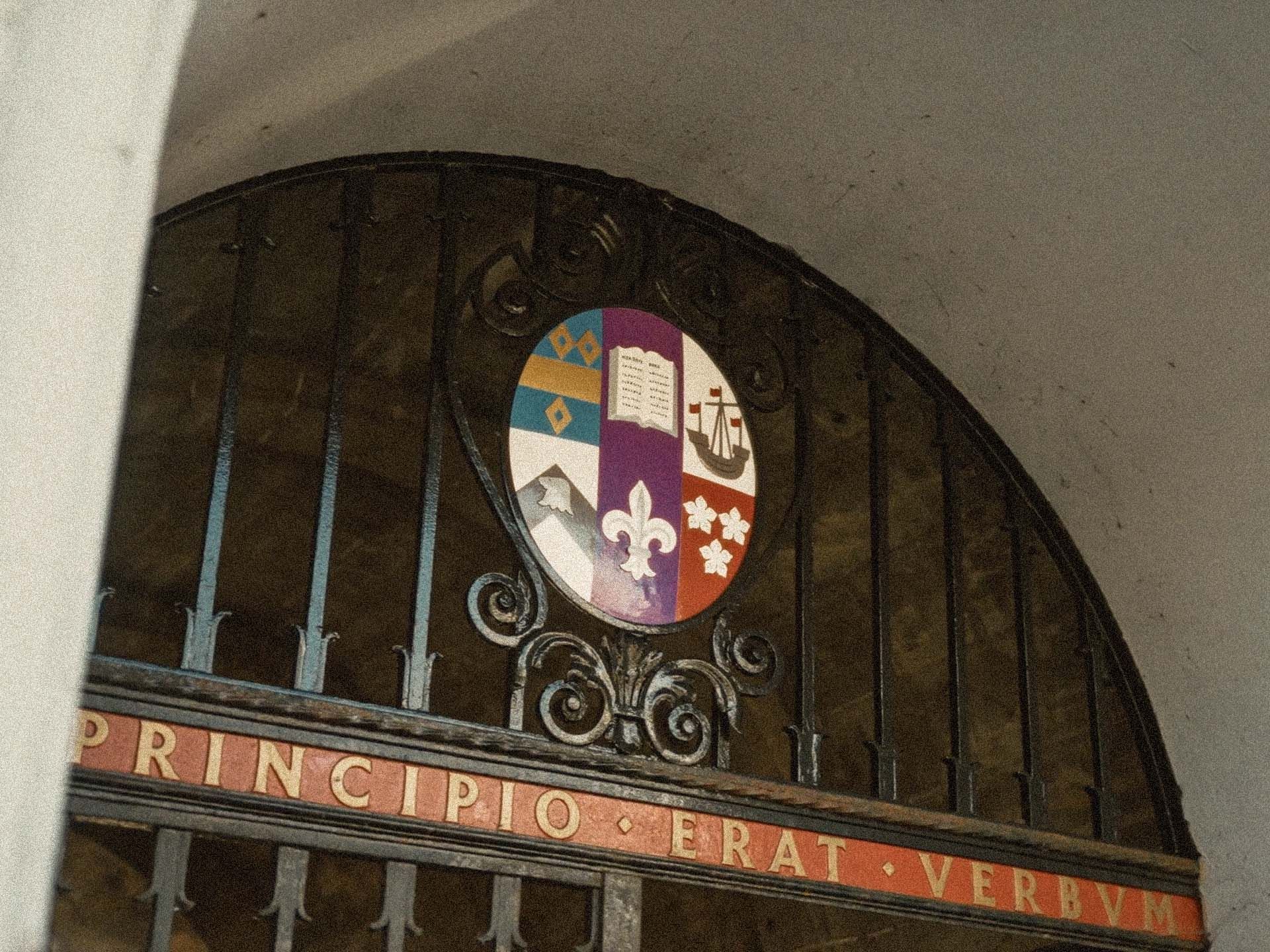
Why is the theme of Missionary 2026 “The Lord Who Sends”?
Christian missions does not begin with us. It does not begin with the missionary who goes, or even with the church that sends him. Missions begins with the Lord Himself.
The Church is certainly a sent people. Jesus calls us “the light of the world” (Matthew 5:14), and Revelation pictures the churches as lampstands bearing witness to Christ. As the body of Christ, the whole Church has been sent to proclaim the gospel and make disciples of all nations.
At the same time, the Church is the body that sends. From among her members, the Church identifies qualified and called men and women, commissions them, and sends them to make Christ known where He is not yet known. These missionaries do not go as independent religious adventurers.They go on behalf of Christ’s church (Acts 13:1–4).
Sending is not merely “a moment.” The churches that send missionaries remain their co-laborers. We support them, pray for them, care for them, encourage them, and hold them accountable (Acts 14:26–28). They go, and we go with them through our fellowship in the gospel. Paul expected the Roman church to help him on his missionary journey to Spain (Romans 15:24), and John explains that when churches support those who go out “for the sake of the name,” they become “fellow workers for the truth” (3 John 5–8).
Yet if our understanding of missions begins and ends with the Church, it remains too small. It becomes man-centered. We must look behind the Church that is sent and the missionaries whom she sends to behold the Lord who sends them both.
Missions Begins with God
Before the foundation of the world, God determined to redeem a people for Himself. Ephesians 1:3–14 opens this eternal purpose to us in distinctly trinitarian terms. The Father chose us in Christ before the foundation of the world. The Son accomplished our redemption through his blood. The Holy Spirit seals us and guarantees our inheritance.
The missions originates in the love and purpose of the Father. “God so loved the world, that he gave His only Son” (John 3:16). The Father sent the Son to redeem a people from every tribe and language and people and nation. The Father and the Son then sent the Holy Spirit to apply the Son’s saving work, gather Christ’s people, and empower the church’s witness.
We must therefore understand the Church’s mission within these great divine missions: the Father’s sending of the Son and the Father and Son’s sending of the Spirit. Our mission is not something we devised and then asked God to bless. The risen Christ sends His Church into the mission that flows from the Father’s eternal purpose, the Son’s finished work, and the Spirit’s life-giving power.
The Church does not create the mission. She receives it from the Lord.
The Lampstand, the Oil, and the Light
The biblical image of the lampstand helps us see our place in this mission.
The Church is Christ’s lampstand. The Holy Spirit is the oil that enables the lamp to burn. As the Lord declared through Zechariah, the work will be accomplished “not by might, nor by power, but by my Spirit” (Zechariah 4:6). The light shining from the lampstand is not the church herself, much less her creativity, strength, or wisdom. It is “the light of the gospel of the glory of Christ” (2 Corinthians 4:4).
“We proclaim not ourselves, but Jesus Christ as Lord” (2 Corinthians 4:5).
This guards us against two opposite errors. We must not become passive, as though the sovereign Lord had not commanded us to go. But neither may we imagine that the success of the mission depends upon our ability, methods, or strength. The Church is truly instrumental: we pray, give, send, suffer, go, and proclaim. But God alone causes light to shine in darkened hearts.
The Lord sends, the Spirit empowers, and Christ is the light we proclaim.
Sent into Communion with the Triune God
The goal of missions is even greater than the rescue of sinners from judgment—glorious as that rescue is. Christ saves us from sin in order to bring us to God. Through the Son, in the Spirit, we come to the Father. The final blessing of the gospel is God Himself.
Jesus gives us a particularly beautiful glimpse of this trinitarian mission in Luke 10:21–22. “In that same hour,” Luke tells us, “he rejoiced in the Holy Spirit” and said, “I thank you, Father, Lord of heaven and earth.” The Son rejoices in the Holy Spirit and gives thanks to the Father. Then He declares that all things have been handed over to Him by the Father: “No one knows who the Son is except the Father, or who the Father is except the Son and anyone to whom the Son chooses to reveal him.”
Here we see the Father, Son, and Holy Spirit together in the work of revelation and redemption. The Son is sent by the Father, rejoices in the Holy Spirit, and reveals the Father to those whom the Father gives him. The Spirit is not an impersonal force behind the mission but the divine person in whom the Son rejoices and by whom the Father’s saving purpose is carried forward. The Father is not distant from the work of the Son and Spirit but is its loving source and sovereign Lord.
Mission, then, is not merely the delivery of religious information. It is the gracious revelation of the Father through the Son in the Holy Spirit. The nations are summoned to know the God whom the Son reveals and to share in the joy of the triune God.
The Great Commission reflects this same trinitarian end. Jesus commands His Church to make disciples of all nations, “baptizing them in the name of the Father and of the Son and of the Holy Spirit” (Matthew 28:19). God’s elect from every tribe, nation, and language are not merely recruited into a cause. They are brought into union with Christ and communion with the triune God.
Gregory of Nazianzus captured this beautifully in his theological reflection on the Trinity, Oration 40, where he considers the mystery of the divine name into which Christians are baptized. He explains that contemplating the One surrounds him with the splendor of the Three, while discerning the Three carries him back to the One. He then confesses:
“When I think of any One of the Three … my eyes are filled, and the greater part of what I am thinking of escapes me.”
Gregory confesses that the Father, Son, and Holy Spirit are not three gods, nor one person appearing in three forms, but the one true God in three distinct persons. The baptized are therefore brought into the name and fellowship of the whole Godhead. The mystery is so glorious that Gregory finally loses himself in contemplation of the triune God.
The New Testament describes this end as fellowship with God Himself. John records Christ’s prayer: “And this is eternal life, that they know you, the only true God, and Jesus Christ whom you have sent” (John 17:3). Jesus prays that His people may be brought into the fellowship He shares with the Father: “that they may all be one, just as you, Father, are in me, and I in you” (John 17:21).
John gives the same testimony in his first letter: “Our fellowship is with the Father and with his Son Jesus Christ” (1 John 1:3). This fellowship is not merely fellowship with other believers, though it includes that. It is participation in the life of God through union with Christ and the work of the Holy Spirit.
That is the glorious end of mission. God’s people do not merely receive forgiveness, life, or a place in the coming kingdom—though they receive all these blessings. In Christ and by the Spirit, they receive God himself. The Lord who sends is also the Lord to whom the nations are brought.
From the Lord, Through the Church, and Unto the Lord
That is why the Missionary Conference 2026 is centered on The Lord Who Sends.
The mission begins with the Lord’s eternal purpose. It is accomplished through the sending of the Son and applied through the sending of the Spirit. It advances as Christ sends His Church and as the Church sends qualified missionaries. And it reaches its appointed end when redeemed people from every tribe, tongue, and nation know, worship, and dwell with the triune God forever.
Every other subject we will consider—sending, sacrifice, suffering, prayer, generosity, perseverance, and faithful proclamation—belongs within this greater reality. We give ourselves to the work because we have first received the Lord Himself. We send because He first sent His Son and Spirit. We go because Christ sends us. And we proclaim the gospel so that others might share with us in the everlasting joy of communion with the Father, the Son, and the Holy Spirit.
Missions is from the Lord, through the Lord, and unto the Lord. He is its source, its power, its message, and its glorious end. He is the Lord who sends.