The Hawkins Brothers
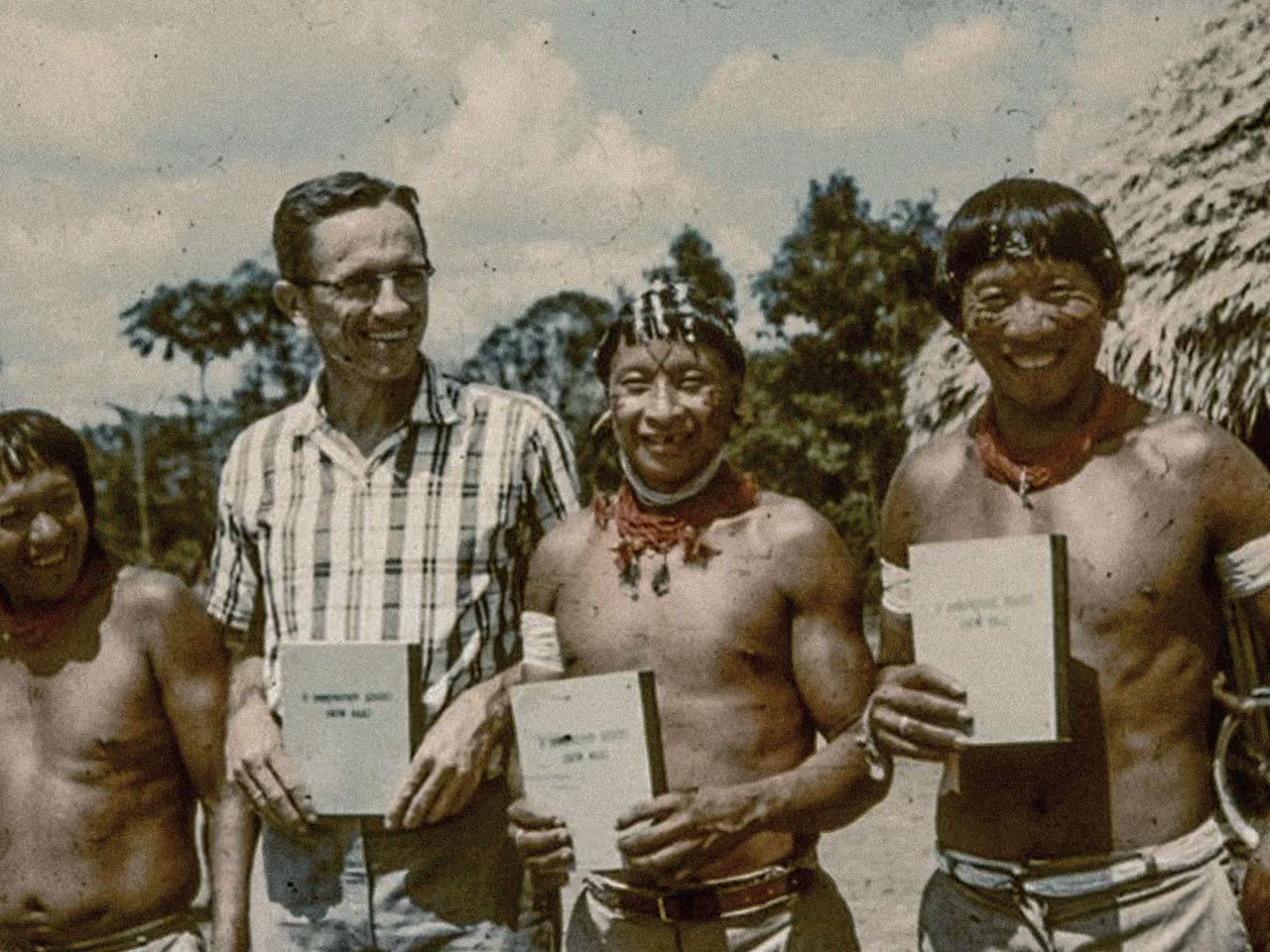
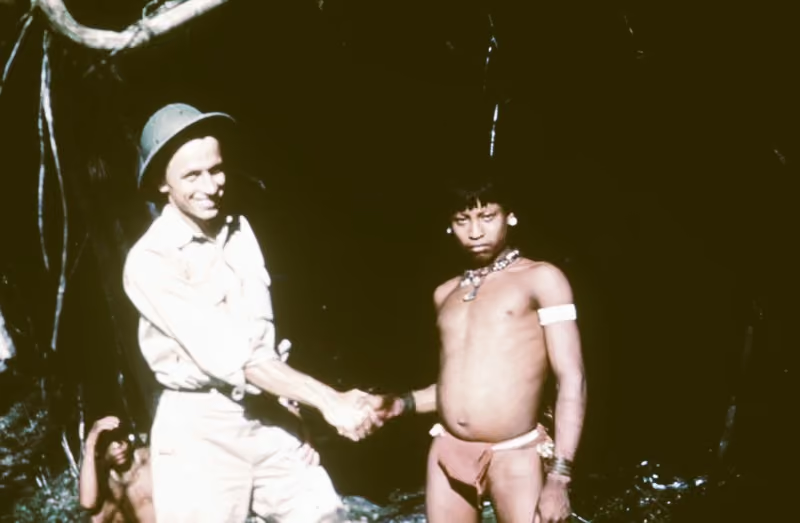
Word spread to the Wai Wais along the lower Essequibo River that “white killers” were coming. It was early 1949 and the “white killers” were brothers Neill and Bob Hawkins, missionaries with the Unevangelized Fields Mission (UFM). Indeed, white men were coming, but contrary to the rumors which had spread from the Wapishanas further north, these men were not bringing death, but life. The Wai Wais had never seen white men before, but they had heard of them and were afraid. When the day finally arrived, they were surprised: first by the friendly demeanor of the two, but also by the fact that there were Wapishanas with them in the canoe. Although suspicious for some time, the Wai Wais came to know these newcomers not as a threat but as ones who loved them, wanted to help them and most of all, to bring them a message of hope in Jesus Christ. Later, a third brother, Rader, would join them. The story of the Hawkins brothers and the Wai Wais, especially the conversion of the shaman chief Elká, can be read in Homer E. Dowdy’s books, Christ’s Witchdoctor and Speak My Words Unto Them. But who were these “white killers” that the Wai Wais had been so afraid of?
The Brothers’ Background
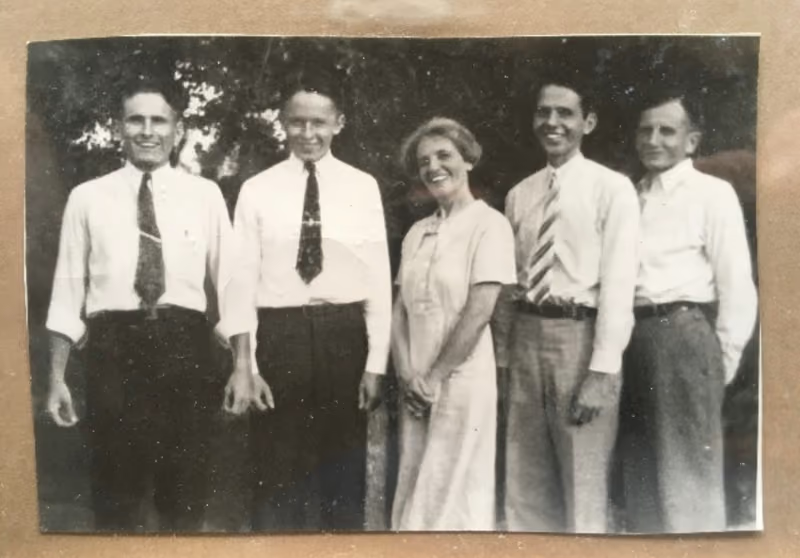
Neill, Rader, and Bob Hawkins were born into a Christian home in Fort Worth, Texas. Considering their upbringing, one might conclude that they were destined to be missionaries. In the 1930s, their father, William Hawkins, was well known throughout Texas, Arkansas, and Oklahoma as a pioneering Christian radio announcer, delivering morning evangelistic messages over the airwaves. He was also instrumental in starting churches and helping struggling ones, working closely with Dallas Seminary to get young, aspiring preachers into pulpits. His zeal for the gospel was not lost on his sons. Madelle, the boys’ mother, was fervent in prayer, encouraging her sons to enter full-time gospel ministry.
By the time all three brothers had made their way to the Wai Wais, Neill had been in South America for close to eight years. He was born in 1915 and, after graduating from high school, had gone to Wheaton College to study medicine. There he heard news of the Three Freds. The incident had a profound effect on him. Consequently, after graduating he enrolled at Columbia Bible College (CBC), determined to serve as a missionary to the Indigenous people of South America, particularly Brazil. He also spent time at the Summer Institute of Linguistics (SIL) preparing for Bible translation. In 1942, he married Mary McMahan and the two were immediately off to Belem, Brazil. But since it was war time, they had to take a circuitous route, first through the Panama Canal from New Orleans to Ecuador, then over the Andes in a small plane to the navigable headwaters of the Amazon. From there they took a steamer all the way to Belem––about 2700 miles! It was in these early days in Brazil that Neill met Horace Banner, one of the two UFM missionaries who had gone in search of the Three Freds. Banner was able to provide Neill with a picture of the various indigenous groups in the Amazon basin as far away as NW Brazil. Neill and his wife would settle into work among the Macushis whose territory straddled the Rio Branco in Brazil and British Guiana. It was during Neill and Mary’s time there that they heard about the Wai Wais. Neill was determined to reach them with the gospel.
Rader, born in 1917, had followed a similar path as Neill, attending Moody, CBC, and Wheaton. He too attended SIL in the summers. He married Ann Delia in 1943 and by 1946 they were on their way to Belem as well. Bob, the youngest, was born in 1922. He followed the same path as his older brothers to Wheaton and CBC, but then went on to Dallas Seminary. He married Florine Hause in 1950 and they too were on their way to British Guiana to serve amongst the Wai Wais.
Bob’s Work
All three of the Hawkins brothers were involved in the early work with the Wai Wais, but then took different paths. It was Bob, whom the Wai Wais called Bahm, who would stay the longest with them, working for years in translating the scriptures into the Wai Wai language. Bob and Florine labored with the Wai Wais for many years with Bahm working on the Old Testament translation. Anecdotally, but of great significance, when the Wai Wai New Testament was produced and handed out to the Wai Wai people in 1984, one man asked Bahm why his Bible was so much bigger than his. Bahm replied that his contained the Old Testament as well as the New. The Wai Wai man asked if the Old Testament was also God’s word. Bahm said yes, to which the Wai Wai replied, “Well, go get busy and start working on it!” Thus, the love for God’s word by a people who had never heard it just a few years before.
Rader’s Work
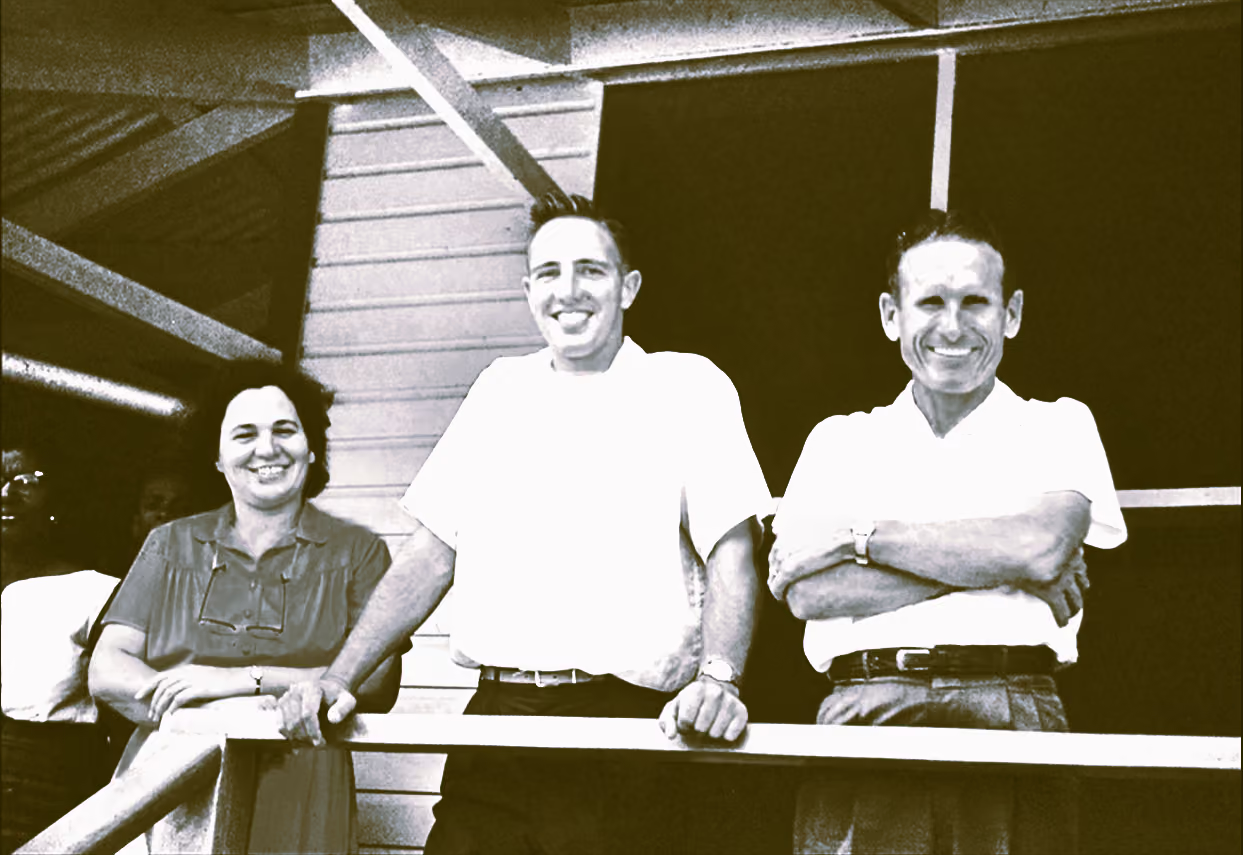
Rader’s focused on the Georgetown area of British Guiana. The location became a hub for bringing in UFM missionaries from the States and also for relaying supplies to the various UFM mission sites in both that country and in Northern Brazil. As significant as the ongoing work for the various UFM sites was Rader's work in the region in planting and ministering in various churches both in the Georgetown area and later in Brazil at the town of Santerem along the Amazon River. Rader was described as a true evangelist and a person of boundless energy in regard to all the work in which he was involved. He was significant in inspiring others, including a slightly later UFM missionary, Don Borgman, who grew up in the same church as Ann Delia, Black Rock Congregational in Connecticut.
Neill’s Work
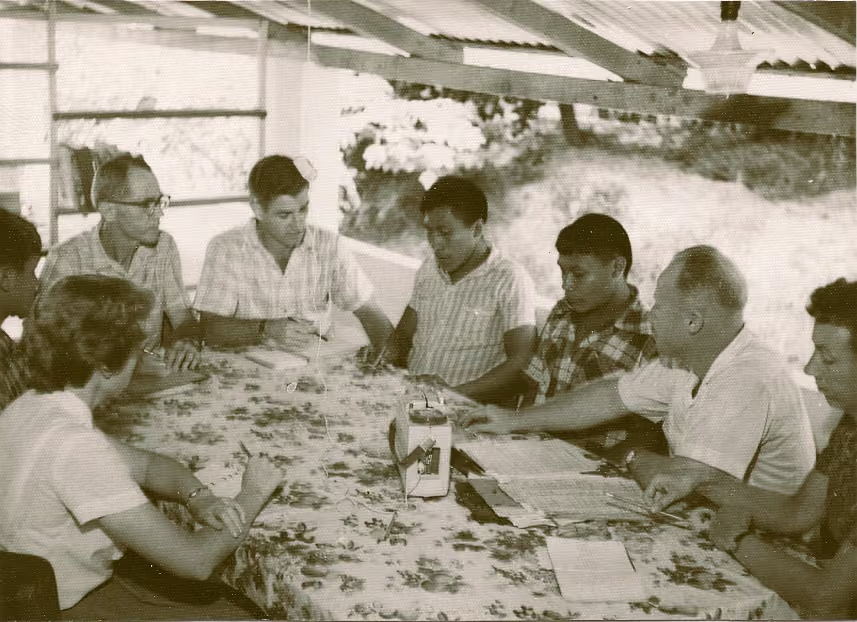
Neill’s work on the field was the most varied. As a visionary, it had been Neill who initiated contact with the Wai Wais, but he had a much broader scope in mind. He had heard of the Yanomami people of NW Brazil, a previously unreached people. Just as he had desired to bring the gospel to the Wai Wais, he was determined to do the same for the Yanomamis. In order to do that, he needed to recruit 20 new missionaries. While on furlough in 1954, he went about doing just that and within a year or two these new volunteers began to arrive on the field. Aerial surveys of Yanomami villages by Missionary Aviation Fellowship (MAF) were done along westward lying tributaries to the Rio Branco in the mid-1950s, all under the direction of Neill. Out of this came the realization of Neill’s vision for the North Amazon field of UFM. In 1957, an expedition up the Urericoera River was launched by Bob Hawkins, Rod Lewis, and two Wai Wais (Elká and church elder Mawashá). After four months of negotiating innumerable rapids and portaging around waterfalls, they made first contact with the Waicas, a subgroup of the Yanomamis. There, they put in an airfield and established a mission post, calling it Waica Station. The following year, another expedition was launched, this time up the Mucajai River by Neill, John Peters, and again two Wai Wais, including Mawashá, who would participate in other forays as well. (Lewis and Peters were among the twenty missionaries that Neill had raised. The Wai Wais by this point had turned to Christ en masse and were now desirous in bringing the gospel to other indigenous groups. Their participation was indispensable.) Here the group made first contact with the Ninam people, another subgroup of the Yanomamis. An airstrip and mission station named Mucajai were established here as well. By the mid-1960s, there were four UFM mission sites in the greater region all as a result of Neill’s vision.
Neill’s work was not finished however, his gifts and personality leading him in a different and vital direction. By the late 50s and early 60s, opposition to missionary work had surfaced in the Brazilian government which suspected that the work in Yanomami territory had clandestine motives. Neill was a diplomat in many ways. He and Mary made their way to Rio de Janeiro to meet with government officials. They spent the next two years there seeking to alleviate those concerns and to ensure the ongoing mission efforts in the North Amazon region. It was during this time that Neill and Mary met many young Brazilians who were dedicated to Christ. To him, it seemed that the Brazilian church had a stake in the very work he and the others were trying to achieve. Out of this came another vision: to enlist young Brazilian Christians to go to the Yanomamis and others. In 1959, a Brazilian mission agency called MEVA (Evangelical Mission to the Amazon) was born and partnered with UFM North America. The focus was on the various indigenous groups in the region. Today, many Brazilians work alongside foreign missionaries in the North Amazon. For the last ten years before his death in 1982, Neill continued to recruit young Brazilians by teaching missions courses at the Word of Life Institute near Sao Paulo. He established a missions major, the first in Brazil, which continues to this day. His efforts were felt far and wide, even to the former Portuguese colony of Mozambique.

Conclusion
Three brothers with very different gifts and personalities: one a visionary, diplomat and inspirer; another with boundless energy to expand and sustain the work of the gospel; and a third, focused and persevering for a long, drawn out task. All contributed accordingly to the dissemination of the gospel to a people lost. Not only was their impact direct, but indirect as well. The Wai Wais would go on to bring the gospel to neighboring indigenous groups including the Atroais, a very dangerous people known for treachery and violence. One is reminded of the parable of the talents. Brother William Hawkins and his wife Madelle took what was given them and invested it in their sons, for the Lord. The result was manifold. In the end, the Hawkins brothers did not bring death, but life––life abundant through Jesus Christ. And this blessing reached thousands and still does today.
"The thief comes only to steal and kill and destroy. I came that they may have life and have it abundantly." John 10:10