Even By My Dying: The Story of Fenton Hall
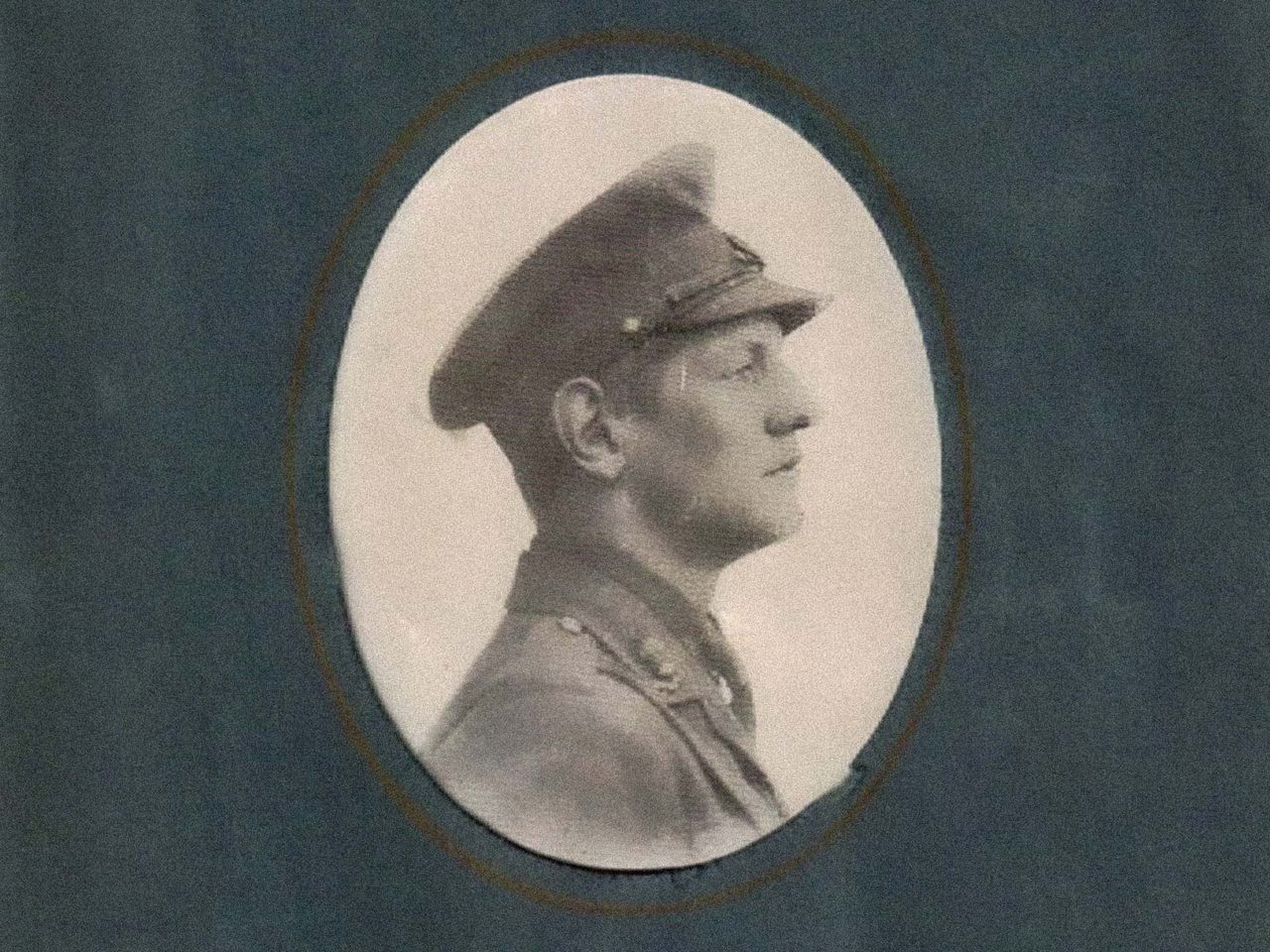
Fenton Hall died at Sepucaia, a remote village along the Pindaré River in Brazil, on December 25, 1924. The cause of death was jungle fever. He had been in Brazil for approximately six months and on the trail to reach various Guajajara villages for about three of those six. (The Guajajaras were an Indigenous group that lived along the Pindaré. At the time, they had little to no contact with the gospel but had a good amount of interaction with Brazilians coming into the area.) At his side were two Brazilians––Mariano and Gregoriano, whose home he was staying at. Also present was a teenage boy, Domingos, who had accompanied him on his journey along the forest trails, and Clemente, a Brazilian trader who had joined the two along the way. Domingos was the son of Joao Soares da Costa, whom Hall had met in mid-September. Da Costa had sent the boy as a guide with the expectation of return by the end of December. When no word was heard from either, he set out to look for them. He reached Sepucaia on January 16 and there learned of Hall’s death. It was reported that when Hall arrived at the location on November 17, he was suffering from a high fever, had dysentery, was soaked by the rains, and in very weakened condition. They tried everything they could to help him, and even though he had some apparent periods of recuperation, nevertheless succumbed to his illness.
Ernest George Fenton Hall was born in 1898 and raised on the West Coast of Ireland. As a lad, he spent much time with his mother and siblings exploring the coastline of Clew Bay. He was devoted to his mother and had a close relationship with his sister. While still a young woman, his sister died from spotted fever, likely picked up from a soldier’s child whom she was caring for at the time. She was known among the children as the “Gentle Goliath” for her loving nature to all in the neighborhood. “Goliath” may seem a bit odd unless one considers the size of her brother, Fenton, who was over 6’4’’ inches and of sizable proportions. Fenton was a competitive athlete and later, while in the military, would become a champion boxer. He too, was a gentle giant. Fenton was educated in Southeast England at Bexhill-on-Sea and then Eastbourne College. He excelled academically at both and was finished with his schooling by the age of 17.
At that time, World War I was in full swing. Fenton pursued an officer’s commission at Woolwich and after passing his exam at only 17, was assigned to the Royal Artillery Garrison at Tees. Two years later, he was at the front and fought during the great “Hindenburg Push.” One day, while seeking to find a forward observation post with a commanding officer, both were caught in a gas attack. They were seriously burned and temporarily blinded by the exposure. During this time, Fenton’s brother was badly injured in an attack at Paschendale Ridge. At war’s end, Fenton was stationed on the Island of Malta. It was here that he was introduced to the Officers’ Christian Union, which began to stir his heart to God. Once back in England he was seconded to the Royal Air Force in which he became a flying officer. One evening, he randomly picked up a copy of C. T. Studd’s little booklet entitled, The Shame of Christ. It convicted him and he gave his life to Jesus and the gospel. Not taking long after hearing the need for missionaries in the Amazon, he resigned his commission and joined the Heart of Amazonia Mission, a new focus of C.T. Studd’s Worldwide Evangelisation Crusade (WEC) and counterpart to the Heart of Africa Mission. Once joined, he attended WEC’s Missionary Training Colony in 1922 where he and other recruits went through both spiritual and physical training in order to be prepared for the field.
From the beginning of Fenton’s walk with the Lord, he was dedicated to two things: prayer and sharing the gospel. This was evident from the time he attended the training colony to the time of his death. He participated in various evangelistic crusades in England and also was a member of a “gospel trek” in his native Ireland going from town to town sharing the gospel. There, the group experienced varying degrees of opposition and persecution, including being detained, arrested and even having rocks thrown at them. Yet, they persevered. Earlier, while still training at the colony, a number of the trainees participated in a gospel meeting at Battersea. There was a crowd blaspheming and opposing the work. A trainee put a hand on one of the mockers to stop him and a physical altercation ensued. Fenton, across the room, saw what was happening, strode through the crowd, picked up the blasphemer and took the flailing offender outside, to which the crowd of toughs followed. Once outside, someone foolishly closed the doors leaving Fenton to face an angry crowd. Fenton stood in front of the door, arms folded, and would not let them back in. His face evidenced what he endured, but he did not retaliate. Afterwards, one person said to him, “Mr. Hall, you’re a big fellow and a boxer. Didn’t you feel like knocking one of those fellows down?” His response, with a smile on his face, was, “It never crossed my mind!” Such was his nature: always gentle, serving, genuine, forebearing, sincere and kind. He also had a great sense of humor, usually with himself as the brunt.
On May 23, 1923, Fenton sailed from Liverpool to Brazil. As was his habit, he spent many hours in prayer and witnessing to anyone who would listen to him: other passengers, crew members, and even officers, including the captain. He also, wanting to make himself useful, worked on the ship. For a while, he was a painter while on board. He could not know for sure if anyone actually came to faith, but it seemed to him that some were close, including the ship’s engineer. He was well liked and respected by everyone on board.
The ship arrived at Maranhao, Brazil on June 19. Fenton spent the next two months in Portuguese language study. During this time, he met Ernest Wootton who had been doing pioneering work in the interior for over a decade, trying to reach the dangerous Kayapos. Wootton told Hall about a tribe known as the Guajajaras who were in great need of the gospel. Fenton decided to take up the task, determined to reach as many of the twenty villages that Wootton had told him about as he could. Wootton introduced Hall to a Brazilian pastor by the name of Elias Traveres who told him that he would accompany him to the interior to meet the Guajajaras. They began their journey on September 4 and after a couple of days on a steamer, transferred their luggage and supplies to a dugout canoe. Heavily laden, full to the gunnels and nearly awash, five crowded into the cramped conveyance and after much difficulty during the journey, arrived at their destination of Santa Ignez, near the people they were seeking to reach. Traveres left Fenton at the house of Joao da Costa, a farmer, only two days from the nearest Guajajara village. Da Costa was a Christian, was on very good terms with the local people and very supportive of what Hall was seeking to do. Here, Fenton spent more time in language study, helping da Costa around his farm and getting to know the local Guajajaras as well as possible and sharing the gospel with them.
On October 6, Fenton and da Costa’s son Domingos started out on their journey to reach the various Guajajara villages, as many as they could before the end of December. From the beginning, Hall had kept a journal. (See The Journals of Ernest George Fenton Hall: Pioneer and Hero) From this date on, a very vivid description of their journey is recorded. The majority accounts three things in general: the arduous trek over difficult and faint trails, terrible swarms of mosquitoes and other insects, snakes and piranhas, and carrying very heavy loads, most of which Hall did on his own; times of extensive prayer each day–– both on his own and with Domingo and later, Clemente; and time with the Guajajaras they encountered, most of whom listened politely, but showed little interest in gaining more understanding nor commitment. Language was the greatest barrier. As the weeks progressed, Fenton went barefoot and shed clothing. The beating on his feet, which started to cripple him, the heat, rain, mosquitoes and load-bearing all began to take a toll. It should be noted that Hall’s initial instructions had been to proceed to a point and wait to meet up with another missionary once the rainy season subsided. Hall had decided to press on regardless.
The group, now consisting of three, had made it as far as Sepucaia on November 17. Hall was in bad shape and succumbed to sickness on Christmas Day.
Some might look at this situation and think what a waste, as many did when they received the news and read his diary. Nevertheless, Fenton Hall became an inspiration to others to reach the Guajajaras and other groups in the lower Amazon basin, including Fred Roberts, leader of the Three Freds, whose wife was to be buried next to Hall just a couple years later. Fenton Hall poured himself out as a drink offering for the sake of the gospel. He was at the time compared to David Brainerd. Others have viewed him as a Jim Elliot of another generation. From a poem he wrote in an earlier day, entitled Ecce Homo, we read this excerpt:
And grant that if I die for thee, O Jesus Christ my Master,
Those who behold may by my death, Thy Christhood come to know.
O Christ my Lord so dwell in me, that even by my dying,
Those watching may be drawn to find Thy blood’s redeeming flow.