The Wai Wais Bring Good News
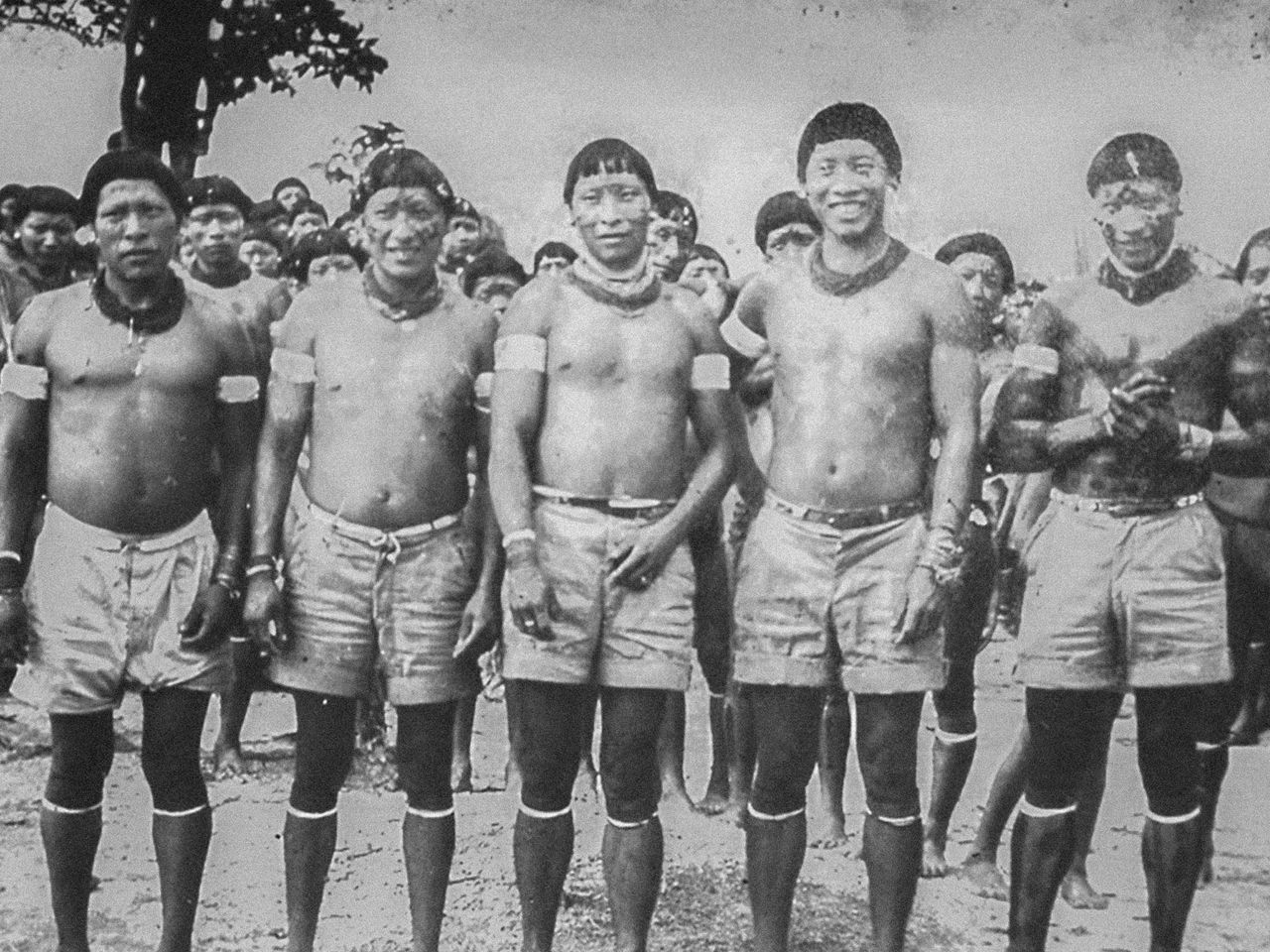
“Go down this path and you will find angry killers who have never caught hold of Jesus.” Thus said a Wai Wai (pronounced Y-Y) believer to a young Christian by the name of Fawtaw, a member of the Katwena people. The angry killers were the Atroais (pronounced Ah-tro-ah-ees), an isolated people who lived along the Alalaú River deep within the forest of Northern Brazil. The Wai Wai man was correct: the Atroai were killers, known for treachery and death to all who encountered them, native and outsider alike. No outsiders were allowed to enter their lands and survive. Numerous reports of both individual and mass killings had been reported through the years and anyone treading on their lands took their lives into their own hands. Nevertheless, the Wai Wais, and Fawtaw as well, had a burden on their hearts to reach these people with the gospel.
Wai Wais, originally from the upper Mapuera River region of Brazil, had lived for a time along the lower Essequibo River in South British Guiana when the Hawkins brothers first visited them. Through the ministry of UFM missionaries Neill and Bob Hawkins, the Wais Wais had come to faith. The lynchpin in their mass conversion was the experience of Elká, the former Wai Wai shaman. When Elká had invited Jesus into the “pit of his stomach,” his fellow tribesman thought he would surely die by the work of the spirits he served. He did not die, as he told them he would not, thus breaking enslavement to fear of the spirit world not only for himself, but his people. The Wai Wais began to “get ears” for God’s word and within a few years, had denounced their devotion to the spirits and shamanism and now sought to serve the true God. A church was born, conversions and baptisms took place, leaders like Elká were appointed, God’s word was taught by Wai Wai leaders, discipline was practiced and a once degenerate culture, as the Wai Wais saw it for themselves, began to serve the Lord, following His law.
The Wai Wais also had a deep desire to bring the good news of the gospel to their neighbors, indigenous groups who lived across the border in Brazil. They took the Great Commission seriously as part and parcel of their calling to faith. At first, it was to reach members of their own people, the Wai Wais in Brazil. In so doing, their relatives were invited to move entire families over the mountain passes to the Essequibo River to live with them, to hear God’s word and support each other both spiritually and materially. It didn’t take long and the Wai Wais penetrated further along rivers and forest paths to reach other groups. It included Carib speakers like themselves, but some different languages as well. Of these were the Katwenas, Shedeus, the Tunayanas, the Karafous ( former enemies), and even the Trios in far away Suriname. The Katwenas particularly were invited to come live with them, exemplifying the kind of self-sacrificial hospitality Paul speaks of in Romans. During this time, Wai Wai elders Elká, Mawashá, and Klemtu also made trips with Bob and Neill Hawkins and others to distant areas to reach previously unreached language groups for the gospel, specifically the Yanomami people of Northwest Brazil.
At one point, the Brazilian government invited three Wai Wais––Feroshá who was to be a chief one day, Kuruná who was Elká’s oldest and a third by the name of Taruchí––to go with government officials to make contact with a tribe known as the Gojodas, a remote and hostile group, near the headwaters of the Amazon. The motive of the government was pacification in order to put in a military airstrip near the Brazilian border. The motive of Feroshá and the other two was to reach these people––a people they had never heard of before–– with the gospel. The expedition accomplished what it set out to do, but the encounter did not go well. The totally naked and hideously painted Gojodas took all their belongings, including their clothes which they shredded, cut off Kuruná’s hair, spat on them, and forced them to demonstrate feats of strength. The group barely escaped with their lives, the Gojodas shooting arrows at them as they retreated. In retrospect, Feroshá stated that the Gojodas needed Jesus and if given the opportunity, he would return to them to help them get ears for the gospel. He also quipped humorously at a later date, that had the Gojodas been better shots, he never would have become chief! Payment by the Brazilian government for the Wai Wai efforts in this endeavor were two pairs of pants each, none of which apparently fit very well.
During all this time, the Wai Wais never forgot the Atroais. These people became, in many ways, foremost in their hearts. The Atroais were a people who needed Jesus. The Wai Wais decided they would try to make contact with the group. Among the group was Fawtah, the Katwena convert who had been shown the trail to the angry killers who did not know Jesus. In the early 1960s UFM missionary Donald Borgman along with Elká and several others launched an expedition to make contact with the Atroais. This attempt ultimately failed and as Don later remarked, was foolish and would have most likely resulted in all their deaths. UFM efforts were then diverted to the Yanomami country. Yet, the Wai Wais were determined to reach them, but they needed to be closer. A decision was made to cross the westward mountains into Brazil and establish a village along the Novo River for that very purpose. The village, quite remote, was named Anaua taken from the mountain looming above. Several families made the journey including those of Yakutá (Elká’s brother) and Kirifaká, early elders of the church. They were now on the outskirts of Atroai territory.
An expedition was ultimately launched in 1968 and contact was made. Yakutá led the group. Things could have gone terribly wrong. The initial contact resulted in the Wai Wais being surrounded by men with bows and arrows drawn, but the Atroai chief, a treacherous and violent man, decided to hear what the Wai Wais had to say. After the Atroais had taken much of their belongings, the Wai Wais made the decision to leave the area. At first the Atroais would not let them depart, physically detaining them. Once they were able to get away, the Atroais pursued them in canoes for the better part of a day. Paddling upstream, it was all the Wai Wai delegation could do to keep ahead of them. Subsequent attempts at contact were made with varying degrees of success.
Word came in early 1975 that a high official with the FUNAI (the National Foundation of Indigenous Peoples) had been killed by the Atroais. This man, Gilberto Pinto, was the chief officer in charge of pacification of the group and had interacted peacefully with them for about ten years. (The Brazilian government was interested in building a highway that would go directly through Atroai territory.) At one of these meetings, the Atroais suddenly turned on Pinto and two of his colleagues for no apparent reason, killed them and butchered Pinto. Despite this news, the Wai Wais were still focused on interacting with the Atroais for Christ. They were warned by the missionaries not to make an expedition, fearing they would all be killed. Nevertheless, yet another expedition was launched. One Wai Wai stated that if it was God’s will that he be killed in trying to reach them again, he was ready to give his life. After a couple more peaceful encounters, a few of the Atroais began to get ears for God’s word. Later, about a dozen came directly to the Wai Wai settlement along the Novo River and settled in for a long visit. They wanted knives, axes, beads and particularly Wai Wai women. The Wai Wais did some trading but of course were unwilling to give up their wives and daughters. The Atroais left unhappily and that night staked themselves outside the small village terrorizing the Wai Wais with their killer calls. They then departed. (At a later date, one member of this Atroai group told the Wai Wais that they had come to kill them all.) Another time, more than 90 Atroais showed up to move in with the Wai Wais. Although they stayed for a short period of time, two Atroais orphan boys remained behind. These two began to get ears for the gospel.
Over time more contacts were made and a few more Atroais began to get ears.
A new Atroai chief had taken over who at first had good relations with the Wai Wais. But that soured over time. The Brazilian highway construction had commenced and leaders in the government were interested in pacifying the Atroais in their own way by providing gifts to the new chief. Not only that, but those in charge of the process did not want them associating with the Wai Wais with one official saying to the Atroai leader, “you’re Atroais––you should live as you always did, communing with the spirits and living the life of revelry that you did before.” Why they were told this is difficult to understand, except for the fact that the government wanted to keep its influence on the new chief unabated without outside interference. Regardless, the Wai Wais continued to make visits. At one point, sickness entered the Atroai villages and some people died. The government officials working with them blamed it on the Wai Wais, which could have been the case due to the numerous visits. Whatever the source, the government now forbade any further interaction between the Wai Wais and the Atroais. Contact was virtually cut off, an end to the Wai Wai attempts to bring the gospel to the people they loved for Christ. Today, it is reported that only about 0.1 percent of the Atroai people are Christians with the majority still practicing shamanism.
Despite these tremendous setbacks by forces beyond their control, the Wai Wais firmly believed that one day the Atroais would catch hold of Jesus, just as they themselves had many years before. For over twenty-five years, starting in the 1960s, the Wai Wais had prayed for the Atroais, had launched expeditions to make contact with them for the sake of Christ, had sought to live with them and had even invited them to come live in their village. Despite the dangers, threats and seemingly little gospel response, they persisted. In regard to the latter,
1 Corinthians 3:7 surely was not lost on the Wai Wais––one sows, another waters, but it is God who brings about the increase. Perhaps one day the seeds planted so long ago would sprout, grow and bear fruit. The Wai Wais continued to pray to that end. In the meantime, one could only marvel and praise God for the conversion of one man, the former shaman Elká, and how that led to thousands coming to faith: Wai Wais, Katwenas, Shedeus, Tunayanas, Karafous, Trios and even the far away Yanomamis. The Wai Wais had been obedient to the gospel call, “To declare his glory among the nations, his marvelous deeds among all people.” (Psalm 96:3) As for Fawtaw, he went down that path in faith, met those angry killers, loved them, and brought them the good news of Jesus Christ.
For the full story of the Wai Wais, one should read Homer Dowdy’s books Christ’s Witchdoctor and Christ’s Jungle.
How then will they call on him in whom they have not believed? And how are they to believe in him of whom they have never heard? And how are they to hear without someone preaching? And how are they to preach unless they are sent? As it is written, “How beautiful are the feet of those who preach the good news!”
(Romans 10:14–15)